

If someone else’s negligence took the life of your spouse, child or parent, a San Antonio wrongful death lawyer at Hill Law Firm Accident and Injury Lawyers can explain who can bring a claim, the deadlines that apply and what your family can recover. We represent only families and injured people, never insurers or the companies they cover.
Call (210) 960-3939 or contact us online for a free, confidential consultation. There are no out-of-pocket fees, and no fee unless we recover money for your family.
Best Wrongful Death Lawyer in San Antonio, Near Me
Hill Law Firm’s wrongful death lawyers represent families in San Antonio and across Bexar County who lost a spouse, child or parent because of someone else’s negligence. The firm represents only plaintiffs, and it has handled wrongful death cases ranging from fatal car accidents to surgical errors.
A San Antonio wrongful death attorney at the firm looks into how the death happened, identifies who may be legally responsible, deals with the insurance companies and, when a fair settlement is not offered, takes the case to trial. The consultation is free, and there is no fee unless the firm recovers money for the family. Call (210) 960-3939 to talk it through.
- What Families Need to Know First
- Advantages of Working With Hill Law Firm Wrongful Death Lawyers in San Antonio
- Hill Law Firm Wrongful Death Results
- What Our San Antonio Clients Say
- Meet the San Antonio Wrongful Death Team
- Who Can File a Wrongful Death Claim in Texas?
- Family Situations That Are Not Straightforward
- The Wrongful Death Claim and the Survival Claim
- Probate, Appointment and the Estate
- How the Money Is Divided
- Types of Compensation a Wrongful Death Attorney in San Antonio Handles
- What Can and Cannot Be Recovered in Texas
- Common Fatal Injuries in Wrongful Death Cases
- Wrongful Death Statistics in San Antonio
- San Antonio Areas Where We Handle Wrongful Death Cases
- How Many Fatal Accidents Occur in San Antonio per Year?
- How Can a Wrongful Death Attorney in San Antonio Protect Your Family’s Rights?
- What Should Families Do Immediately Following a Wrongful Death?
- What Not to Do After a Wrongful Death
- The Autopsy, the Medical Examiner and the Death Certificate
- Types of Wrongful Death Cases in San Antonio
- Common Causes of Fatal Incidents in San Antonio
- What Are the Laws Related to Wrongful Death in Texas?
- Deadlines: How Long Families Have to Act
- What Services Do San Antonio Wrongful Death Lawyers Offer?
- Liability and Fault
- If the Death Happened at Work
- If the Death Happened in a Hospital or Care Facility
- When There Is Also a Criminal Case
- Whose Death It Was Changes the Case
- Investigation and Evidence
- Damages and Compensation
- Legal Process
- The San Antonio Wrongful Death Claim Process, Start to Finish
- Insurance and Settlement
- Lawyer Selection and Representation
- Finding a Wrongful Death Attorney Near You
- Support and Resources for Families in San Antonio
- San Antonio Wrongful Death FAQs
- Talk to a San Antonio Wrongful Death Lawyer – Free Consultation
What Families Need to Know First
In the first weeks after a death, a few practical questions come up before anything else. The short answers are below, and each one points to the section that explains it in full.
-
01
Whether You Are the Person Who Can Bring the Claim
In Texas, the wrongful death claim belongs to the surviving spouse, children and parents of the person who died, and any one of them can bring it for all of them. Other relatives, however close, do not have a claim of their own. The details are in "Who Can File a Wrongful Death Claim in Texas?"
-
02
The Deadline, and Why It May Be Shorter Than You Think
A wrongful death lawsuit generally has to be filed within two years of the date of death, but some claims carry much earlier requirements, such as written notice when a city, county or other government body is involved. Evidence can also be lost while a family waits. Every time limit is explained in "Deadlines: How Long Families Have to Act."
-
03
Whether an Estate Has to Be Opened First
Not for the wrongful death claim, which belongs to the family members themselves. The separate survival claim, for the losses of the person who died, is usually brought by the estate's executor or administrator. "The Wrongful Death Claim and the Survival Claim" explains the difference, and "Probate, Appointment and the Estate" explains how someone is appointed.
-
04
What Nothing Requires You to Decide This Week
No law requires a grieving family to accept an offer, sign papers or choose a course of action in the first days after a death. What helps is protecting the evidence and learning the deadlines early. "What Should Families Do Immediately Following a Wrongful Death?" sets out the first steps. When you are ready, a free consultation at (210) 960-3939 carries no obligation.
Advantages of Working With Hill Law Firm Wrongful Death Lawyers in San Antonio
- No fee unless we recover – the fee comes only from money recovered for the family.
- Free consultation, no obligation – talk to a lawyer first and decide later.
- Trial experience in wrongful death cases – a trial firm that tries cases many other firms turn down.
- Licensed in Bexar County courts and the Western District of Texas – the firm can pursue a claim in state or federal court.
- We represent families, never insurers or defendants – the firm represents only plaintiffs.
No Fee Unless We Recover
Hill Law Firm handles wrongful death cases on a contingency fee, which means there is no fee unless the firm recovers money for the family. The fee comes out of a settlement or verdict, not out of the family's pocket while the case is pending. That matters because a death often leaves a household with funeral bills, final medical bills and a lost income at the same time.
A contingency fee also lines the firm's interests up with the family's: the firm is paid only if the case succeeds. You can read more about how contingency fees work for personal injury lawyers, and how fees and expenses come out of a recovery is covered in "How the Money Is Divided."
Free Consultation, and No Obligation to Proceed
You can speak with a wrongful death attorney at Hill Law Firm at no cost and with no commitment. The first conversation is a chance to explain what happened, ask questions and hear a candid view of whether there may be a claim before deciding anything.
Many families call while they are still grieving and unsure whether a claim is the right step. Nothing has to be signed during the consultation, and there is no obligation to hire the firm afterward. The aim is for the family to make an informed decision on its own timeline. The firm's office address and phone number are listed on its contact page.
Trial Experience in Wrongful Death Cases
Justin Hill calls Hill Law Firm a trial firm that tries cases many other firms turn down. Before founding the firm, he tried cases ranging from car accidents to wrongful death claims, and in 2022 he won a $2,925,000 jury verdict in McCullough v. Marmolejo, the 17th largest personal injury verdict in Texas that year and more than 500 times the pre-trial offer. SaraNeil Stribling has won favorable verdicts in negligence, wrongful death and commercial vehicle cases.
Insurers weigh a case differently when the lawyer on the other side is willing to try it. Settling can be the right choice, but only when the offer reflects the family's real losses; when it does not, a jury can decide.
Licensed in Bexar County Courts and the Western District of Texas
Justin Hill is licensed in Texas state courts and in the U.S. District Courts for the Southern, Eastern and Western Districts of Texas. SaraNeil Stribling is licensed in all Texas state courts and all U.S. District Courts in Texas. Bexar County cases in federal court are heard by the Western District of Texas, San Antonio Division.
This matters because a wrongful death claim does not always stay in one court system. A defendant from another state may try to move the case to federal court, and the family needs lawyers who can continue in either court. "Legal Process" explains when that can happen.
We Represent Families, Never Insurers or Defendants
Hill Law Firm represents only plaintiffs: people and families harmed by the negligence of others. The firm does not represent insurance companies, corporations being sued or other defendants, so there are no competing loyalties when it negotiates with an insurer or a company on a family's behalf.
The firm's work outside the courtroom reflects the same commitment. Justin Hill supports the South Texas chapter of Mothers Against Drunk Driving and does pro bono work for the Rape Crisis Center in San Antonio. If you want to talk with a firm that only represents families, call (210) 960-3939.
Hill Law Firm Wrongful Death Results
No settlement or verdict changes what happened to a family. What a claim can do is hold the responsible party accountable and give the family some financial stability. Below are wrongful death results the firm has published. Every case turns on its own facts, and past results do not guarantee or predict a similar outcome. More outcomes are on the firm’s case results page.
-
01
Fatal Commercial Vehicle Crash
A family lost a loved one in a crash involving a commercial motor vehicle. The firm secured a $9 million settlement for the family.
Crashes involving commercial vehicles can involve several parties, such as the driver and the company the driver works for, and each may carry its own insurance. Sorting out who is responsible, and which policies apply, is often the first task in a case like this one.
-
02
Drunk Driving Crash That Took Two Young Lives
In Ramirez v. 210 Ceviche et al., a drunk driving crash took the lives of two young adults and permanently injured two more. The firm represented all of the plaintiffs, and the case settled for a confidential amount.
Cases where one crash causes several deaths and injuries require the claims of different families and injured people to be handled together, and with care for each of them.
-
03
Commercial Bus Rollover
In Campos v. Greyhound, a mechanical failure and a poorly trained driver caused a commercial bus to roll over. Multiple people were killed and injured. The case settled for a confidential amount.
A bus rollover can affect many families at once, and the questions often reach beyond the driver to how the bus was maintained and how the driver was trained.
-
04
Impaired Driver Who Ran a Stop Sign
A driver under the influence of drugs ran a stop sign and killed a father of one. The case settled for the at-fault driver's policy limits.
When the available insurance is limited, the amount of coverage can set the ceiling on what a family recovers, which is one reason it matters to find every policy that may apply.
-
05
Gas Can Explosion That Killed a Toddler
Two young boys were playing in a garage when a gas can tipped over and its vapors ignited. The can exploded because the company failed to include a safety device that cost less than one dollar. One toddler was killed, and another boy was burned. Justin Hill represented the family in the lawsuit and in the bankruptcy proceedings that followed.
Not every wrongful death claim comes from a crash. Learn more about gas can defect claims, or call (210) 960-3939 to discuss what happened to your family.
What Our San Antonio Clients Say
Families who have worked with Hill Law Firm often talk about how the firm communicated with them during one of the hardest periods of their lives, not only about the outcome. You can read their experiences in their own words on the firm’s client testimonials page, and you are welcome to call (210) 960-3939 with any questions.
★ ★ ★ ★ ★
“I had a wonderful experience with Hill Law Firm. All of Justin’s staff goes above and beyond to assist and fight for their clients. They are aggressive and get big results. I am very grateful for HLF! Highly Recommend!”
– Angela B.
“I had the opportunity to work with the Hill Law Firm on a wrongful death case in San Antonio. I was impressed with Mr. Hill’s knowledge of the law, rapport with the client and the client’s family members, and his expertise in negotiation. Their staff was professional and courteous and attended to each and every request that was made on his firm. I highly recommend Justin Hill in contested litigated matters.” – Tyler
Hold negligent parties accountable with a San Antonio wrongful death lawyer.
Lost a Loved One in An Accident?
Meet the San Antonio Wrongful Death Team
The lawyers below work on the firm’s wrongful death cases. The firm also works with investigators, experts and sometimes other lawyers to evaluate a case.
Justin Hill
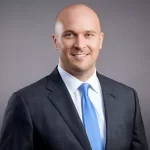
Justin Hill founded Hill Law Firm in San Antonio in 2015. He began representing people and businesses in South Texas in 2007 at a nationally recognized plaintiffs’ firm, where he was named partner at the end of his first year and tried cases ranging from car accidents to wrongful death claims. He represents only plaintiffs.
He earned his J.D. cum laude from Baylor Law School, where he was Editor-in-Chief of the Baylor Law Review. He has been named a Texas Super Lawyer every year since 2021, after being a Rising Star from 2012 to 2021, served as President of the San Antonio Trial Lawyers Association in 2023 and sits on the Board of Directors of the Texas Trial Lawyers Association.
SaraNeil Stribling
SaraNeil Stribling tried her first case to a jury verdict within months of being licensed, and she has won favorable verdicts in negligence, wrongful death and commercial vehicle cases. She is a graduate of Texas Tech University School of Law.
She is licensed in all Texas state courts and all U.S. District Courts in Texas. She is a member of the Texas Trial Lawyers Association, the San Antonio Trial Lawyers Association and the American Association for Justice.
Hunter Craft
Hunter Craft is Of Counsel to the firm. He began his career defending businesses in catastrophic injury and commercial litigation at Fulbright & Jaworski (now Norton Rose Fulbright), then moved to representing injured people and founded Craft Law Firm in 2013. His work focuses on transportation, workplace, product liability and other catastrophic injury cases, and he has litigated in more than 30 states against more than 50 Fortune 500 and Global 500 companies.
Best Lawyers named him “Lawyer of the Year” for plaintiffs’ personal injury litigation in Houston in 2020 and 2022, and he has been listed in Best Lawyers since 2015. He was first named a Texas Super Lawyer at 29, the youngest in the award’s history, and has been named more than 10 times.
Gabriel Narvaez
Gabriel Narvaez is an attorney with the firm. He was raised in Laredo and earned his B.B.A. cum laude from Texas A&M University in 2018. He received his J.D. cum laude from St. Mary’s University School of Law in San Antonio, where he was Managing Executive Editor of The Scholar: St. Mary’s Law Review on Race and Social Justice.
To speak with a member of the team about your family’s situation, call (210) 960-3939 for a free consultation.
Who Can File a Wrongful Death Claim in Texas?
A Texas wrongful death claim is for the “exclusive benefit” of the surviving spouse, children and parents of the person who died (Civil Practice and Remedies Code § 71.004(a)). No one else has a wrongful death claim, however close the relationship was. The sections below explain how that rule works, and the firm’s guide on who can file a wrongful death claim in San Antonio covers it further.
Section 71.004 names three groups: the surviving spouse, the children and the parents of the person who died. The statute does not reach further into the family tree, and it does not use a broader term like "next of kin," so there is no guesswork about who the beneficiaries are.
A parent can bring a claim for the death of a child of any age, because § 71.004 sets no age limit. Every person in the three groups shares in the claim, whether or not that person is the one whose name appears on the lawsuit. Questions about adopted children, children born outside marriage, common-law spouses and other less clear-cut relationships are covered in "Family Situations That Are Not Straightforward."
Texas does not rank the three groups against each other. A surviving spouse does not outrank an adult child, and a child does not outrank a parent. All three stand on equal footing under § 71.004.
In practice, this means the parents of an adult who leaves a spouse and children are not shut out of the claim simply because a spouse or children survive. Each eligible person has a stake in the recovery, and the law does not require the family to settle any question of seniority before a case can move forward. How the money is then shared among them is explained in "How the Money Is Divided."
The wrongful death claim belongs to the family members themselves, not to the estate of the person who died. All of them can bring it together, or one or more of them can bring it for the benefit of everyone in the three groups (§ 71.004(b)). A single adult child, for example, can file for the whole family without waiting for a sibling or a surviving parent to join.
Because the family sues in its own right, for its own losses, no estate has to be opened for this claim. The estate's separate claim for the losses of the person who died is explained in "The Wrongful Death Claim and the Survival Claim."
If none of the surviving spouse, children or parents has filed within three calendar months after the death, the executor or administrator of the estate must bring the wrongful death claim (§ 71.004(c)). This backstop keeps a valid claim from being lost while a grieving family is still deciding what to do.
There is one exception: the executor or administrator does not bring the claim if all of the spouse, children and parents ask that it not be brought. Even when the executor or administrator files, the claim is still brought for the benefit of the family members, not for the estate. How someone is appointed is explained in "Probate, Appointment and the Estate."
Several relationships that feel close in everyday life are not named in § 71.004, and the people in them have no wrongful death claim of their own:
- Siblings, including adult brothers and sisters
- Grandparents
- Stepchildren and stepparents
- Unmarried partners and fiancés, however long the relationship lasted
A 2025 bill to add siblings to the list did not become law. When the person who died left no spouse, child or parent, there is no wrongful death claim, but the estate's own claim, the survival claim, remains. How these situations play out for real families is covered in "Family Situations That Are Not Straightforward."
Because any one of the eligible family members can sue for the benefit of all of them, Texas treats the wrongful death claim as a single case. A San Antonio appeals court has said the law contemplates only one suit, brought for the benefit of everyone entitled to recover (Avila v. St. Luke's Lutheran Hospital, Tex. App.-San Antonio 1997).
For a family, this means the spouse, children and parents are usually part of the same lawsuit, even if only one of them is named as the plaintiff who filed it. It also means the defendant answers for the death once, in a case that accounts for each family member's losses together rather than in a series of separate suits.
Families do not always agree on whether to sue, who should take the lead or whether to accept an offer. Because one eligible person can bring the claim for everyone (§ 71.004(b)), a relative who objects cannot by that alone keep the case from being filed, but every eligible family member still has a stake in the outcome.
Disagreements can arise in blended families and where relatives are estranged. A lawyer handling the claim has to keep every eligible family member informed and treat each person's share fairly rather than favoring whoever filed first. How the recovery is divided is explained in "How the Money Is Divided," and what happens when relatives want different lawyers is covered in "Lawyer Selection and Representation."
The surviving spouse, children or parents do not need an executor or administrator in place to file a wrongful death claim. They can file directly, in their own names, without waiting for an estate to be opened.
Appointment matters later only in limited situations. When an executor was appointed and sued, a federal court dismissed a family member who tried to file her own claim after the three months (Morin v. Ford Motor Co., N.D. Tex. 2009); courts have allowed late family claims where no administrator had been appointed. The survival claim is different, and "Probate, Appointment and the Estate" explains when an appointment is needed for it. Time limits are explained in "Deadlines: How Long Families Have to Act." If you are unsure who should file, call (210) 960-3939 for a free consultation.
Family Situations That Are Not Straightforward
Blended families, long-term partners, children born outside marriage and families with no close relatives all raise questions about who may bring a claim. In Texas, standing depends on the legal relationship to the person who died, not on how close the family was. The basic rule is explained under “Who Can File a Wrongful Death Claim in Texas?”; the situations below are the ones that most often need a closer look. Where Texas law has no clear rule, a family should talk to a lawyer before deciding who will file.
An unmarried partner or fiancé has no wrongful death claim of their own in Texas, however long the couple lived together. Civil Practice and Remedies Code § 71.004 names only the surviving spouse, children and parents, and unmarried partners and fiancés are not on that list. This can feel deeply unfair to someone who shared a home and a life with the person who died. Two points still matter. Children the couple had together are the deceased's children and have their own claim. And if the couple met the requirements for an informal marriage, described in the next section, the survivor may be a legal spouse after all. A lawyer can look at the couple's history before anyone assumes there is no claim.
Texas recognizes informal, or common-law, marriage. A couple is married without a ceremony or license if they agreed to be married, lived together in Texas as spouses and told others they were married, or if they signed a declaration of informal marriage (Family Code § 2.401). A surviving informal spouse is a surviving spouse and can bring the wrongful death claim. The marriage usually has to be proven, and other relatives or an insurer may dispute it. If no suit to prove the marriage is filed before the second anniversary of the couple's separation, the law presumes there was no agreement to be married (§ 2.401). Gathering evidence of how the couple lived and presented themselves early, while documents and witnesses are easy to find, makes the claim easier to prove.
A surviving same-sex spouse is a surviving spouse under Texas wrongful death law, with the same right to bring the claim and share in the recovery as any other widow or widower. States must recognize same-sex marriages (Obergefell v. Hodges, U.S. 2015). If an insurance adjuster or a relative questions the marriage, a lawyer can address it directly so the claim moves forward on the correct legal footing. If the couple never formally married, the rules for informal marriage in the section above may apply.
A spouse who was separated from the person who died, or in the middle of a divorce that was not final, may still be the surviving spouse. How Texas treats the marriage at the moment of death, and how a pending divorce affects the claim and the division of any recovery among the spouse and children, depends heavily on the facts and the timing. These cases mix family law and wrongful death questions, and there is no simple answer that fits every family. Anyone dealing with a death during a separation or divorce should talk to a lawyer before taking any step on the claim.
Stepchildren and stepparents have no wrongful death claim based on the step-relationship alone; they are not named in § 71.004. This often surprises blended families in which a stepparent raised a child from a young age. The loss is just as real, but the right to sue depends on the legal relationship. A completed adoption changes that, as the next section explains. A will can leave property, including the estate's survival claim recovery, to a stepchild, but it cannot create a wrongful death claim. A lawyer can review the family's history and any adoption or estate papers.
An adoption creates the parent-child relationship for all purposes (Family Code § 162.017). An adopted child can bring a claim for the death of an adoptive parent, and adoptive parents can bring a claim for the death of their child, the same as biological family. An order terminating parental rights ends the legal rights between that parent and the child, except that the child keeps the right to inherit unless the court ordered otherwise (§ 161.206). A parent whose rights were terminated is therefore generally no longer treated as a parent. The wording of the court order matters, so a lawyer should review it.
A child whose father was never married to the mother can bring a claim for the father's death. The Texas Supreme Court has held that paternity is a question of fact that can be proven in the case (Garza v. Maverick Market, Tex. 1989), and a court can decide paternity by clear and convincing evidence (Estates Code § 201.052). When paternity was never formally established, the family will need evidence of the relationship, and that evidence is easier to gather early. Anyone facing a paternity question should raise it with a lawyer at the start, before decisions are made about who files and how the claim is set up.
A child born after a parent's death can still bring a claim for that parent's death. In Garza v. Maverick Market (Tex. 1989), the child was born after the father died and the Texas Supreme Court allowed the claim. If the parents were not married, paternity is proven as described in the section above. A child's own claim follows a different timetable from the adults' claims, explained under "Deadlines: How Long Families Have to Act". Because the rest of the family's claim keeps running, families expecting a child should talk to a lawyer early rather than waiting for the birth.
Parents can bring a wrongful death claim for the death of a child of any age; § 71.004 sets no age limit. The Texas Supreme Court has held that parents can recover for loss of companionship and mental anguish after a child's death, not only for financial value (Sanchez v. Schindler, Tex. 1983). With an adult child, the evidence usually focuses on the relationship itself: how often the parent and child saw each other, whether they lived together or helped each other, and what the child meant to the parent's daily life. Each type of loss is explained under "Types of Compensation a Wrongful Death Attorney in San Antonio Handles".
Siblings and grandparents have no wrongful death claim of their own in Texas. They are not named in § 71.004, and a 2025 bill to add siblings did not become law. This is hard for families in which a brother, sister or grandparent was the person closest to the one who died, or helped raise them. The estate's own claim, the survival claim, is separate. Its recovery belongs to the estate, which passes under the will or Texas inheritance rules, so whether a sibling or grandparent shares in it depends on the will and on who else survived. A lawyer can explain how that applies to a particular family.
A parent who abandoned a child is not automatically shut out, but a court can take away that parent's rights. A probate court can find, by clear and convincing evidence, that a parent abandoned and failed to support a child under 18 for three years or more. That parent is then treated as if he or she died before the child, both for inheritance and for "any other cause of action based on parentage" (Estates Code § 201.062, amended 2023). It takes a court finding; it does not happen on its own. Records such as support and custody orders often matter, so the other parent should talk to a lawyer early.
If the person who died left no surviving spouse, child or parent, there is no wrongful death claim, because only those three groups are named in § 71.004. The estate's own claim, the survival claim, remains. It is brought for the estate, usually by an executor or administrator, and covers the losses of the person who died rather than the family's losses. Any recovery becomes part of the estate. For these families the survival claim is often the only route to a recovery. The two claims are compared under "The Wrongful Death Claim and the Survival Claim", and how someone gets authority to act for the estate is explained under "Probate, Appointment and the Estate".
Section 71.004 has no residency requirement; the claim depends on the family relationship. Texas courts have allowed undocumented people to recover lost future earning capacity, and may exclude evidence of immigration status as unfairly prejudicial (Republic Waste Services v. Martinez, Tex. App.-Houston 2011; Tyson Foods v. Guzman, Tex. App.-Tyler 2003). Families often worry that bringing a claim could expose relatives to immigration problems. That concern is worth raising directly with a lawyer at the first meeting, so the family understands what the case will involve before deciding how to proceed.
If your family's situation does not fit neatly into the law, call Hill Law Firm at (210) 960-3939 for a free consultation about who can bring the claim.
The Wrongful Death Claim and the Survival Claim
When a death is caused by someone else’s negligence, Texas law gives two separate claims. The wrongful death claim belongs to the surviving spouse, children and parents and covers their own losses. The survival claim is the injured person’s own claim, which does not end at death, and it covers the losses that person suffered before dying. The difference affects who brings each claim, what it covers, where the money goes and when it must be filed. For a longer explanation, see our guide to the wrongful death claim vs. survival action.
The wrongful death claim compensates the surviving spouse, children and parents for what the death took from them. It is not about what the person who died went through; it is about what the family lost. It covers lost financial support and services, loss of inheritance, loss of companionship and society, and mental anguish. Family members can recover for mental anguish and loss of companionship without any physical injury of their own (Moore v. Lillebo, Tex. 1986). Each of these losses is explained under "Types of Compensation a Wrongful Death Attorney in San Antonio Handles".
The survival claim is the claim the person who died could have brought had they lived. It survives "to and in favor of the heirs, legal representatives, and estate" (Civil Practice and Remedies Code § 71.021). It covers the person's own losses: medical expenses before death, the pain and mental anguish the person consciously suffered before death, and funeral expenses the estate paid. A claim for pain and suffering needs evidence that the person was conscious. When death came quickly, this part of the case can be small; when someone survived for days or weeks, it can be significant. Learn more about a San Antonio survival action.
The survival claim is usually brought by the estate's personal representative, meaning an executor or administrator appointed by a probate court. Heirs can bring it without opening an estate only in a narrow situation, explained under "Whether an Estate Must Be Opened Before the Survival Claim Is Filed." Because the recovery belongs to the estate rather than to one family member, the person who brings it acts for everyone entitled to the estate. How appointment works, and what happens when a family member files before being appointed, is explained under "Probate, Appointment and the Estate".
The two claims are not alternatives. In most fatal injury cases, both are brought together because each covers a different loss. Without the survival claim, the medical bills and conscious suffering of the person who died would go unaddressed. Without the wrongful death claim, the lasting losses of the spouse, children and parents would not be compensated. When there is no spouse, child or parent, only the survival claim exists. Bringing both in one lawsuit also lets one jury hear the whole story of what happened and what it cost the family.
Because the claims are legally distinct, their deadlines start from different events. The wrongful death claim runs from the date of death, when the family's own loss occurred. The survival claim runs from the date of the injury, with a suspension after the death. The difference matters most when a person was injured and lived for weeks or months before dying. The exact periods, the suspension and the exceptions are set out under "Deadlines: How Long Families Have to Act".
Wrongful death damages go to the spouse, children and parents themselves, while survival damages belong to the estate and pass under the will or Texas inheritance rules after the estate's obligations are paid. That means survival money can reach a different group of people, in different proportions, than wrongful death money. How each kind of money is shared, and whether creditors can reach it, is explained under "How the Money Is Divided."
Texas calls punitive damages exemplary damages, and only some family members can recover them for a death. The Texas Constitution (art. XVI, § 26) limits exemplary damages for a homicide to the surviving spouse and children, the "heirs of the body," so parents and the estate cannot recover them that way; a 2023 proposal to change this never went to voters. Exemplary damages for a death are asserted through the wrongful death claim, not the survival claim (Ross v. Union Carbide, Tex. App.-Houston 2009). When they are available and what must be proved are explained under "Punitive Damages for Gross Negligence."
To talk through which claims your family has, call (210) 960-3939.
Probate, Appointment and the Estate
The wrongful death claim belongs to the spouse, children and parents and does not need an estate. The survival claim belongs to the estate, so Texas probate law decides who has authority to bring it, and that authority usually comes from a probate court. A representative may sue to recover damages owed to the estate (Estates Code § 351.054). Probate is a separate court matter from the injury lawsuit, and families often work with a probate lawyer on it.
Usually, yes. The survival claim is normally brought by an executor or administrator. Heirs can bring it without opening an estate only if they show that no administration is pending and none is necessary (Shepherd v. Ledford, Tex. 1998; Austin Nursing Center v. Lovato, Tex. 2005). Defendants often challenge that showing. In Lovato, a family member filed before being formally appointed and was appointed after the deadline, and the Texas Supreme Court held that the later appointment related back to the timely filing. That rule helps, but it is safer to deal with appointment early than to rely on it.
Appointment comes from the probate court, in a case separate from the wrongful death lawsuit. The person named in the will as executor has first priority to serve. After that come the surviving spouse, the principal beneficiary of the will, other beneficiaries, and then next of kin (Estates Code § 304.001). If all the heirs or beneficiaries agree, the administration can be independent of court supervision (§§ 401.002, 401.003). Which path fits depends on whether there is a will, what it says and whether the family agrees.
Letters testamentary (when there is a will) or letters of administration (when there is not) are the court's proof that a person may act for the estate. Defendants and insurers commonly ask for a copy before they negotiate the survival claim, because they want to know that the person signing a settlement or release has the authority to do so. Having current letters on hand early keeps the claim from stalling on a paperwork question.
When there is no will, a court can determine who the heirs are (Estates Code § 202.002), and the court can appoint an administrator, who receives letters of administration. The priority list for who may serve, which includes the surviving spouse and next of kin, is described in the section on being appointed above. When relatives disagree about who should serve, the family should talk to a lawyer before the survival claim is filed.
Texas offers two shortcuts, but neither appoints anyone to act for the estate. A small estate affidavit is available for an estate without a will worth no more than $75,000, not counting the homestead and exempt property, at least 30 days after the death and with the judge's approval (Estates Code § 205.001; as of October 2026). A will can be probated as a muniment of title, without appointing a representative, when the estate has no unpaid debts other than real estate liens (§ 257.001). Families sometimes use one of these for a house or bank account and later learn that a survival claim needs an appointed representative. A lawyer can help decide which route fits before anything is filed.
When an estate needs someone right away, a probate court can appoint a temporary administrator, with limited powers (Estates Code § 452.001). This can help when a deadline is close, evidence needs to be protected, or a defendant is pressing toward a resolution before anyone has authority to act for the estate. A temporary administration is meant to bridge a gap, not to replace a full administration.
Bexar County has three probate courts at the Bexar County Courthouse, 100 Dolorosa, San Antonio, TX 78205: Probate Court No. 1 (Room 117), Probate Court No. 2 (Room 123) and Probate Court No. 3 (Suite 1.20). The County Clerk's Probate Division, 100 Dolorosa, Suite 104, (210) 335-2241, handles probate filings, guardianships and small estate affidavits. Because probate is separate from the wrongful death and survival lawsuit, the appointment and the injury case often move forward on parallel tracks.
A will generally cannot be probated more than four years after the death (Estates Code § 256.003), and letters of administration must be sought within four years (§ 301.002(a)). The exception matters for injury cases: the four-year limit does not apply when administration is needed to recover property owed to the estate (§ 301.002(b)); a lawyer can say whether that applies to a particular estate. The survival claim has its own, much shorter filing deadline, explained under "Deadlines: How Long Families Have to Act", so families should not treat the four-year probate period as the time they have.
An executor or administrator acts for the estate, not for themselves. The representative must care for estate property as a prudent person would (Estates Code § 351.101). Money recovered on the survival claim belongs to the estate, not to the representative personally, and is paid out in the order the law sets before what remains passes to the heirs or beneficiaries (§ 355.102). Family members who have concerns about how the estate is being handled can raise them with the probate court, and should talk to a lawyer about how.
If you have questions about appointment and the survival claim, contact Hill Law Firm for a free consultation.
How the Money Is Divided
A wrongful death recovery is divided among the surviving spouse, children and parents in the shares the jury finds (Civil Practice and Remedies Code § 71.010). It is not split like an inheritance. Each person's share reflects the losses that person suffered, so a spouse who relied on the income of the person who died and a young child who lost a parent's daily care may receive different amounts, even though both are entitled to recover.
Money from the survival claim is handled differently, because it belongs to the estate rather than to individual family members. The section "The Wrongful Death Claim and the Survival Claim" explains the difference between the two claims. Keeping the two amounts separate in any settlement or verdict matters, because they follow different rules once they are paid.
Texas law does not assign a fixed percentage to a spouse, a child or a parent. There is no chart in the statute. If the case goes to trial, the jury hears evidence about each person's loss and decides each share (§ 71.010). If the case settles, the family members, with their lawyers, usually agree on how the money is allocated among them.
The evidence that shapes a share is the same evidence that proves the loss: how much each person depended on the one who died, how old the children are, how close each relationship was, and what the person contributed to the household. Disagreements over allocation can arise, particularly in blended families, and the section "Who Can File a Wrongful Death Claim in Texas?" explains why Texas expects one lawsuit for the whole family.
When a child has a claim, the child's claim is brought by a "next friend," usually a parent or other adult, and the next friend can settle the child's claim only with the court's approval (Texas Rule of Civil Procedure 44). The judge reviews the proposed settlement and how the child's share will be protected before signing off.
The purpose of this step is to make sure a settlement does not favor the adults at the expense of a child who cannot speak for himself or herself in court. Whether any other part of a settlement needs a judge's approval depends on the facts of the case, and it is a question to ask a lawyer about directly.
A child cannot sign a release or take money directly, so the next friend acts for the child throughout the case (Rule 44). If the next friend's interests conflict with the child's, for example because the surviving parent is also claiming part of the same recovery, the court appoints a guardian ad litem. That person advises the court on whether the settlement is in the child's best interest and is paid by the hour, not a percentage of the recovery (Rule 173).
Once the settlement is approved, the child's money is not simply handed to a parent. The court can place it in a management trust or in the court registry until the child is older (Property Code §§ 142.001, 142.004). The arrangement depends on what the judge finds appropriate for that child.
Instead of a lump sum held in a trust or the court registry, part of a child's share can be paid as a structured settlement: an arrangement that pays money over time on a fixed schedule. Families sometimes choose this so a young person does not receive a large sum all at once.
Once a structured settlement is in place, the payments cannot simply be sold off later for cash. Selling structured settlement payments requires a court order finding that the sale is in the payee's best interest (Civil Practice and Remedies Code § 141.004). Whether a trust, the court registry or a structured settlement fits best depends on the child and the amount involved, and the court considers the arrangement as part of approving the settlement.
Before money is paid out, any party with a right to be repaid from the recovery has to be identified and dealt with. Medicare, for example, must be repaid from a settlement for conditional payments it made for treatment (42 U.S.C. § 1395y(b)(2)). Health insurers and hospitals that treated the person before death may also assert claims for amounts they paid or are owed. Families can read more about paying medical bills from a settlement.
The lawyer's job is to find out which claims exist, confirm the amounts and resolve them before the family's money is released, so that no one comes back later seeking payment. If the Crime Victims' Compensation Program paid any costs, it has its own repayment rule, explained in "When There Is Also a Criminal Case."
Wrongful death cases are usually handled on a contingency fee, which means the lawyer is paid a share of the recovery and is paid nothing if there is no recovery. In Texas, a contingency fee contract must be in writing and signed by both the lawyer and the client (Government Code § 82.065).
The written agreement also says how case expenses, such as filing fees, deposition costs and expert fees, are handled and whether they are taken out before or after the fee is calculated. What remains after the fee, expenses and any repayment claims is the amount divided among the family. Families should read that part of the agreement closely and ask questions before signing it.
Wrongful death damages are "not subject to the debts of the deceased" (Civil Practice and Remedies Code § 71.011). That money goes to the spouse, children and parents in the shares the jury finds, not to the estate.
Survival damages are different. They belong to the estate, and an estate pays its obligations in a set order, starting with funeral and last-illness expenses and the costs of administration (Estates Code § 355.102). Whether a particular debt is paid from survival money depends on the estate, and that is a question for a lawyer. Because the two kinds of money follow different rules, a settlement should state clearly how much is for the wrongful death claim and how much is for the survival claim.
Questions about how a recovery would be divided can be raised in a free consultation at (210) 960-3939.
Types of Compensation a Wrongful Death Attorney in San Antonio Handles
After a death caused by someone else’s negligence, Texas allows two kinds of losses to be recovered: the family’s own losses, through the wrongful death claim, and the losses of the person who died, through the survival claim. The section “The Wrongful Death Claim and the Survival Claim” explains how the two claims work. Each type of compensation below notes which claim it belongs to; a wrongful death attorney in San Antonio reviews every category rather than assuming only one applies.
Medical bills for treatment between the injury and the death belong to the survival claim and are recovered by the estate. This can include ambulance transport, emergency care, surgery and hospitalization, even if the person lived only a short time after the incident.
Families are often surprised that these bills still arrive after a death. A lawyer reviews the billing records to separate charges tied to the fatal injury from unrelated medical debt. How the amount of medical expenses is measured is covered under "What Can and Cannot Be Recovered in Texas."
Funeral and burial expenses the estate paid are part of the survival claim (Civil Practice and Remedies Code § 71.021). This can include the service, burial or cremation, a casket or urn, a headstone and related costs.
Keep every receipt and invoice connected to the arrangements, along with a record of who paid each one, since documentation shows the exact amount rather than an estimate. If the Crime Victims' Compensation Program helped with funeral costs, the section "When There Is Also a Criminal Case" explains how that works.
Lost financial support is part of the wrongful death claim. It covers the money and benefits the person who died would, in reasonable probability, have provided to the spouse, children or parents had they lived. That can go beyond a paycheck to include employer-provided benefits such as health insurance, retirement contributions and regular bonuses, commissions or overtime.
Proving this loss usually means gathering pay records, tax returns and benefit statements, and looking at the person's age, health and line of work. How the future loss is calculated is explained in "Damages and Compensation."
Lost services are part of the wrongful death claim. They cover the practical work the person did for the family that now has to be paid for or goes undone: cooking, cleaning, home repairs, yard work, driving, childcare and managing the household's finances.
This loss counts even when the person earned no paycheck, which is why it matters in families where one person ran most of the household. Because it does not come with an itemized bill, families sometimes overlook it. Testimony from family members about who did what, and how those tasks are now being handled, is usually the main evidence.
When a parent dies, the children's loss of that parent's care, nurturing, guidance and advice is part of the wrongful death claim. It is presented through the claims for lost services and for loss of companionship and society, rather than as a replacement cost.
This loss tends to be shown through the details of family life: the children's ages, how involved the parent was in their schooling, activities and daily decisions, and what the parent taught them. It usually carries the most weight when the children are young and still depend on a parent every day. Teachers, coaches and relatives can help describe that role.
Loss of inheritance is part of the wrongful death claim. It is the present value of what the person who died would, in reasonable probability, have added to the estate and left at natural death to the spouse, children or parents (Yowell v. Piper Aircraft, Tex. 1986).
It is separate from lost financial support, which covers what the person would have provided during life. Loss of inheritance looks at what would have been left at the end of a full life, based on the person's earnings, savings habits and age at death. Prejudgment interest is not added to this part of the recovery, as explained under "Prejudgment Interest" below.
Loss of companionship and society is part of the wrongful death claim. The Texas Supreme Court defines it as the loss of the positive benefits flowing from the love, comfort, companionship and society the family member would have experienced had the person lived (Gregory v. Chohan, Tex. 2023). Parents can recover it after a child's death, not only for financial value (Sanchez v. Schindler, Tex. 1983), and no physical injury to the family member is required (Moore v. Lillebo, Tex. 1986).
Any amount awarded must have "a rational reason, grounded in the evidence" (Gregory v. Chohan). That evidence is the relationship itself: how the family spent time together and what the person meant in daily life.
Mental anguish is part of the wrongful death claim and is separate from loss of companionship. It means the emotional pain, torment and suffering a spouse, child or parent would, in reasonable probability, experience from the death (Gregory v. Chohan, Tex. 2023). Family members can recover it without having been physically injured themselves (Moore v. Lillebo, Tex. 1986).
As with companionship, the amount must rest on evidence. That evidence usually comes from the family's own testimony, from friends or co-workers who saw how the loss changed them, and sometimes from counseling records. The section "Damages and Compensation" explains how the family's grief is shown in court.
The pain and mental anguish the person consciously suffered before death belongs to the survival claim, not the wrongful death claim. It compensates for what the person went through between the injury and the death, and it is recovered by the estate (Civil Practice and Remedies Code § 71.021).
This claim needs evidence that the person was conscious. Someone who lived for hours or days after a crash may have this claim; someone who died instantly may not. Medical and emergency records, accounts from first responders and hospital staff, and anything the person said before passing can all be part of that evidence.
Exemplary (punitive) damages are meant to punish, not to compensate. When a death is caused by a willful act or omission or by gross negligence, they may be recovered in addition to actual damages (Civil Practice and Remedies Code § 71.009). Gross negligence means an act or omission involving an extreme degree of risk, of which the defendant had actual awareness but proceeded with conscious indifference to others' safety (§ 41.001(11)). Families can read more about how punitive damages work.
Only the surviving spouse and children can recover them, through the wrongful death claim, as explained under "Who Can Recover Punitive Damages." They require clear and convincing evidence and a unanimous jury (§ 41.003). The cap is explained under "When the Punitive Damages Cap Does Not Apply."
A wrongful death or personal injury judgment earns prejudgment interest (Finance Code § 304.102). It accounts for the time the family waited for money it was owed. Interest starts on the earlier of 180 days after the defendant receives written notice of the claim or the date the lawsuit is filed (§ 304.104), at the postjudgment rate, which is the prime rate but at least 5% and at most 15% (§ 304.003), as of October 2026.
Prejudgment interest is not applied to loss of inheritance. Because sending written notice early can start the interest clock, it is one of the practical reasons to speak with a lawyer sooner rather than later.
A free consultation at (210) 960-3939 can help sort out which types of compensation may apply to your family.
What Can and Cannot Be Recovered in Texas
Most wrongful death claims in Texas have no cap on damages, but some do: claims against doctors and hospitals, claims against the government, and exemplary damages. Insurance and taxes also affect what a family keeps. This section covers those limits; the damages themselves are described under “Types of Compensation a Wrongful Death Attorney in San Antonio Handles.”
Texas has no general cap on wrongful death damages. In a claim arising from a car crash, truck crash, workplace incident or defective product, the family can seek the full value of its losses, and the jury or the negotiation decides that value from the evidence, not from a preset ceiling.
The exceptions are narrow and are covered in the next sections: claims against physicians and other health care providers, claims against the government, and exemplary damages. Outside those situations, the limits that matter most in practice are usually the available insurance coverage and the evidence the family can put together.
In a health care liability claim, noneconomic damages are capped at $250,000 per claimant against physicians and other providers, and at $250,000 per institution, up to $500,000 for all institutions (Civil Practice and Remedies Code § 74.301), as of October 2026.
A separate cap applies to the total damages in a wrongful death or survival claim against health care providers: $500,000 per claimant, adjusted for inflation since 1977, which is now more than $2.5 million (§ 74.303). That cap does not count medical, hospital and custodial care, and the jury is not told about it. These caps apply only to health care liability claims, not to car crashes, workplace deaths or other negligence claims.
When a government employee or vehicle causes a death, the Texas Tort Claims Act limits the recovery. For the state and for cities such as San Antonio, the limits are $250,000 per person and $500,000 per occurrence; for counties such as Bexar County, they are $100,000 and $300,000 (Civil Practice and Remedies Code § 101.023), as of October 2026. Families can read more about being hit by a government vehicle.
Government claims also have short written notice deadlines that apply well before the general two-year deadline. Those are explained in "Deadlines: How Long Families Have to Act." Because of those notice rules, it helps to get legal advice quickly when a government vehicle or employee was involved.
Exemplary damages are generally capped at the greater of two times economic damages plus noneconomic damages up to $750,000, or $200,000 (Civil Practice and Remedies Code § 41.008(b)), as of October 2026.
The cap does not apply when the death resulted from conduct described as certain felonies, including murder and intoxication manslaughter (§ 41.008(c)). In those cases, a jury can award exemplary damages without the statutory ceiling. What must be proved is explained under "Punitive Damages for Gross Negligence."
Life insurance the family bought is generally not deducted from a wrongful death claim. Under the collateral source rule, a wrongdoer does not get credit for insurance or benefits the family obtained on its own (Haygood v. De Escabedo, Tex. 2011, quoting Brown v. American Transfer & Storage Co., Tex. 1980).
A life insurance payout and a wrongful death claim serve different purposes. The policy pays under a private contract the person who died paid for; the claim holds the at-fault party responsible for causing the death. Families sometimes assume a life insurance payment will shrink what they can recover, but that is generally not how the rule works. A lawyer can review how it applies in your case.
The collateral source rule also applies to benefits the family obtained on its own, such as health insurance: the defendant generally does not get credit for them (Haygood v. De Escabedo, Tex. 2011). There is an important limit, though. Medical expenses that can be recovered are limited to the amounts actually paid or incurred, not the full amount billed (Civil Practice and Remedies Code § 41.0105).
So health insurance does not reduce the claim, but it can affect how the medical expense figure is measured. Any right of an insurer or Medicare to be repaid from the recovery is covered in "How the Money Is Divided."
Damages received on account of personal physical injuries or physical sickness, including wrongful death, are not taxable income under federal law. Exemplary (punitive) damages and interest are taxable (26 U.S.C. § 104(a)(2); IRS Publication 4345). Families can read more about whether a settlement is taxable.
Because the tax treatment differs by category, how a settlement or verdict is allocated matters. A family should understand that breakdown before a case resolves and should talk with a tax professional as well as its lawyer about its own situation.
Texas collects no inheritance tax for deaths on or after January 1, 2005, and repealed the tax in 2015 (Texas Comptroller). A wrongful death recovery is not reduced by a Texas inheritance tax before it reaches the spouse, children and parents.
That does not make every dollar tax-free. The federal rules for punitive damages and interest are explained under "Whether the Recovery Is Taxable."
For a free review of which limits may apply to your family's claim, call Hill Law Firm at (210) 960-3939.
Common Fatal Injuries in Wrongful Death Cases
Understanding the medical nature of a fatal injury often helps explain how the death connects to someone else’s conduct. The injuries below appear often in wrongful death claims. For each, the medical records, the autopsy and the timeline between the incident and the death help show what caused the death.
Traumatic Brain Injuries
A traumatic brain injury happens when a sudden blow, jolt or penetrating object disrupts normal brain function. The damage can range from a concussion to diffuse axonal injury, in which nerve fibers tear as the brain shifts inside the skull. Swelling, bleeding and lack of oxygen inside the closed skull can cause rapid decline, sometimes within hours. More information is on our page about brain injuries.
In a claim, records of how the injury happened, imaging results and the timeline from the incident to the death help show that the defendant's conduct caused the fatal brain injury.
Spinal Cord Injuries
A spinal cord injury happens when the vertebrae, discs or the cord itself are crushed, cut or struck, interrupting signals between the brain and the body. Depending on the level of the injury, a person may lose the ability to breathe unaided, regulate blood pressure or fight infection. Complications such as respiratory failure or blood clots can cause death weeks or months later. More information is on our page about spinal cord injuries.
In a claim, records tracing the path from the spinal injury to the eventual cause of death help connect the defendant's negligence to the death, even when it did not happen right away.
Blunt Force and Chest Trauma
Blunt force to the chest can fracture ribs, bruise or tear the heart and lungs, and fill the chest cavity with blood or air, which interferes with breathing and circulation. A hard enough impact, such as in a high-speed collision, can also disrupt the heart's electrical rhythm and stop it suddenly.
Because chest injuries are not always visible from the outside, emergency room records and the autopsy are often central to showing the connection between the incident and the cause of death.
Internal Bleeding and Organ Injuries
Internal bleeding happens when trauma damages organs such as the liver, spleen or kidneys, or major blood vessels, and blood collects inside the body where it cannot be seen. Early signs such as abdominal pain, dizziness or falling blood pressure can be subtle or delayed, so the bleeding may not be found until a large amount of blood has been lost.
In a claim, the medical timeline can show whether the injury alone caused the death or whether a delay in diagnosis or treatment also played a part, which may bring a medical provider into the case.
Burns and Smoke Inhalation
Severe burns destroy skin and underlying tissue and can lead to fatal infection, organ failure or shock from fluid loss. Smoke inhalation damages the airway and lungs and reduces the oxygen reaching the blood, even in people who were not burned. These injuries arise from vehicle fires, explosions and building fires. More information is on our page about burn injuries.
In a claim, evidence about where the fire started, whether safety equipment was present and working, and how long the person was exposed helps show how someone else's negligence caused the death.
Drowning, Asphyxiation and Suffocation
Drowning and asphyxiation both deprive the body of oxygen, whether through submersion in water, a blocked airway, or a toxic or oxygen-poor atmosphere. Even a short time without enough oxygen can cause permanent brain damage, and a longer time leads to cardiac arrest and death. These deaths happen in pools, confined work spaces, trenches and submerged vehicles.
In a claim, records showing who was responsible for supervision, safety equipment and warnings help show whether a property owner, employer or other party failed to prevent the death.
Sepsis and Multiple Organ Failure
Sepsis is the body's runaway response to an infection, causing widespread inflammation that damages tissue and organs. Without treatment it can progress to septic shock and multiple organ failure, in which several organ systems stop working at about the same time.
Sepsis often follows an earlier injury or treatment, such as an untreated wound, a surgical infection or an infection acquired in a hospital or care facility. In a claim, medical records tracing the infection back to its source are often what connects an earlier act of negligence to the death.
Death Weeks or Months After the Injury
A death does not have to happen right away for a family to have a wrongful death claim. Infections after surgery, complications of a brain injury and organ failure after a long hospital stay can develop over weeks or months, and the original negligence can still be the cause of the death.
When death follows the injury by some time, the wrongful death claim and the survival claim can have different deadlines. The section "Deadlines: How Long Families Have to Act" explains how those two timelines work, and why a family in this situation should get advice promptly.
Poisoning, Overdose and Adverse Drug Reactions
Fatal poisoning and overdose cases arise in many ways: a pharmacy filling a prescription with the wrong drug or dose, a defective or mislabeled medication, carbon monoxide from a faulty heater or generator, medication mismanagement in a hospital or care facility, or exposure to toxic chemicals at work without proper protection.
These cases usually depend on medical records, toxicology results and expert review to show that a drug, chemical or dosing error, rather than an unrelated health condition, caused the death. A pharmacy, manufacturer, care provider or employer that failed to follow basic safety practices may be responsible.
Electrocution
Electrocution deaths often happen at construction sites, oil field operations and industrial plants where high-voltage equipment is part of daily work. Downed power lines, exposed wiring and improperly grounded equipment also endanger utility workers, first responders and bystanders. Defective electrical products, faulty wiring and a property owner's failure to fix a known hazard can all contribute.
Because these deaths often happen on property controlled by a business, more than one party may share responsibility, such as an equipment maker, a contractor and a site owner. Maintenance records, inspection reports and industry standards for electrical work help identify each of them.
Heat and Cold Exposure
Extreme heat or cold can be fatal when someone responsible ignores a known risk. Examples include outdoor workers denied water, shade or rest in extreme heat, a child or vulnerable adult left in a hot vehicle, and a nursing home resident who suffers heatstroke or hypothermia because of poor climate control or neglect.
These claims usually turn on whether the employer, facility or caregiver knew or should have known about the danger and failed to take reasonable precautions. Weather data, internal policies, staffing records and witness accounts help show the death was preventable.
If a fatal injury has left your family with questions, Hill Law Firm offers a free consultation at (210) 960-3939.
Wrongful Death Statistics in San Antonio
The figures below come from the Bexar County Medical Examiner’s Office, the Texas Department of Transportation and the U.S. Bureau of Labor Statistics. Each is cited to one source and current as of October 2026. They give context only: a death counted in these figures is not automatically a wrongful death, and a family’s claim depends on the facts of its own loss.
The Bexar County Medical Examiner's Office investigates deaths of people in Bexar County who die violently or suddenly and unexpectedly. It classified 2,797 deaths it handled in 2025 by manner: 1,192 accidents, 1,054 natural deaths, 276 suicides, 176 homicides and 99 undetermined (BCMEO 2025 Annual Report, as of October 2026). Many deaths that later lead to a civil claim pass through this office, but most deaths it handles never do. A wrongful death claim requires evidence that another person's or company's wrongful act, neglect or carelessness caused the death (Civil Practice and Remedies Code § 71.002).
The medical examiner's accident categories include drug and toxic substance deaths, falls, transportation deaths (motor vehicle, bicycle, pedestrian and train), fire and drowning (BCMEO 2025 Annual Report, as of October 2026). Separately, about 9 Bexar County residents died of drug overdoses each week in 2023 (San Antonio Metropolitan Health District, citing CDC, as of October 2026). The category matters because it points to the kind of claim a family may have. A fatal fall on a business's property raises different questions than a fatal crash or a medication error, and the section "Types of Wrongful Death Cases in San Antonio" explains each.
TxDOT counted 190 traffic deaths in Bexar County in 2025 (TxDOT, 2025 data, as of October 2026). Statewide, Texas had 3,769 traffic deaths in 2025 (TxDOT, as of October 2026). November 7, 2000 was the last day without a traffic death on Texas roads, and more than 91,000 people have died on Texas roads since (TxDOT, as of October 2026). Crashes involving commercial trucks, impaired drivers, pedestrians and motorcyclists each raise their own questions about who is responsible, which the section "Liability and Fault" covers.
Texas recorded 557 fatal work injuries in 2024, and 242 of them were transportation incidents (U.S. Bureau of Labor Statistics, as of October 2026). A death on the job is handled differently from other deaths because of the workers' compensation system, but it does not always rule out a lawsuit. Depending on whether the employer carried coverage and who else was involved, a family may have a claim against the employer or against another company. The section "If the Death Happened at Work" explains those rules.
TxDOT's yearly counts show Bexar County traffic deaths peaking in 2022 and at their lowest of the six years in 2025 (TxDOT, as of October 2026):
| Year | Bexar County traffic deaths |
|---|---|
| 2020 | 196 |
| 2021 | 239 |
| 2022 | 248 |
| 2023 | 212 |
| 2024 | 215 |
| 2025 | 190 |
Each of these numbers is a person and a family. If your family has lost someone, you can call Hill Law Firm Accident and Injury Lawyers at (210) 960-3939 for a free consultation.
San Antonio Areas Where We Handle Wrongful Death Cases
Fatal incidents in the San Antonio area happen in hospitals, on industrial campuses, on oilfield roads and on the highways that carry the region’s freight. Where a death happened often shapes the claim: which laws apply, which insurance is involved, which agency investigated and which county’s courts can hear the case. Hill Law Firm represents families in San Antonio, across Bexar County and in the surrounding communities below.
The South Texas Medical Center
The South Texas Medical Center includes University Health, UT Health San Antonio, Methodist Hospital, Methodist Children's Hospital, St. Luke's Baptist Hospital, Christus Santa Rosa Medical Center and the South Texas Veterans Health Care System (San Antonio Medical Foundation). University Hospital is one of the area's two Level I trauma centers (Texas DSHS), so many of the most seriously injured people in the region are treated there. A death in a hospital can lead to two different questions: what caused the original injury, and whether the care that followed met the accepted standard. Claims against doctors and hospitals follow their own rules, notice requirements and caps, which the section "If the Death Happened in a Hospital or Care Facility" explains.
Brooke Army Medical Center and Fort Sam Houston
Brooke Army Medical Center, 3551 Roger Brooke Dr., Fort Sam Houston, is the area's other Level I trauma center (Texas DSHS). A death connected to a federal facility or a federal employee can involve federal rules that do not apply to an ordinary Texas claim, and whether a claim is possible at all can depend on who the person was and how the death happened. Because the answer turns on specific facts, a family in this situation should ask a lawyer early which rules govern the case before any deadline passes.
Port San Antonio and the Southwest Side
Port San Antonio is a 1,900-acre campus on the former Kelly Air Force Base with more than 80 companies and about 19,000 workers (as of October 2026). The Southwest Side around it also includes warehouses, distribution centers and industrial sites. Deaths in this kind of setting can involve machinery, forklifts and other powered equipment, falls during maintenance work, and vehicles moving through busy yards. When many companies share one site, the employer may not be the only party responsible; a contractor, equipment maker or property owner may also have played a part. The section "If the Death Happened at Work" explains how workers' compensation and third-party claims fit together.
Toyota Texas and South San Antonio Industry
Toyota Motor Manufacturing Texas in south San Antonio has more than 3,700 employees and more than 20 on-site suppliers (as of October 2026). Large manufacturing operations combine heavy machinery, automated equipment, forklifts and constant truck traffic in and out of the plant and supplier sites. A fatal incident in this kind of setting can stem from an equipment failure, missing machine guarding, an unsafe maintenance procedure or a truck crash on an access road. Responsibility can extend beyond the employer to an equipment manufacturer, a maintenance contractor or another company on site, depending on who controlled the condition that caused the death.
The Eagle Ford Shale Counties
South of Bexar County, the Eagle Ford Shale region carries drilling, well servicing and the heavy truck traffic that supports them. TxDOT says the region had 142 traffic deaths in 2025 (TxDOT, as of October 2026). Oilfield deaths can involve equipment failures, fires and explosions, and crashes on rural roads carrying loads they were not built for. On a well site, an operator, a drilling contractor, an equipment supplier and a trucking company may each have controlled part of the work, so it can take records from several companies to learn who controlled the hazard.
I-35, I-10, Loop 410 and Loop 1604
I-35, I-10, Loop 410 and Loop 1604 carry much of the region's commuter and commercial traffic. The Alamo Area Metropolitan Planning Organization's draft freight study says freight congestion is concentrated on I-35, I-10 and Loops 410 and 1604 (as of October 2026). Fatal crashes on these roads can involve large trucks, construction zones and high-speed merging. Depending on how the crash happened, a family's claim may involve not only the other driver but also a trucking company, a company that loaded the cargo or a government body responsible for the road. Our page on fatal car accidents in San Antonio explains how these cases are investigated.
Bexar County
Bexar County takes in San Antonio and most of the places described above. A Texas lawsuit can be filed in the county where the events happened (Civil Practice and Remedies Code § 15.002), so many wrongful death cases from this area are filed in the Bexar County civil district courts at 100 Dolorosa. Some cases can be moved to federal court, and a death outside the county may belong in another county's courts. The section "Legal Process" explains how the court is chosen and how a case moves through it. Hill Law Firm's office is at 445 Recoleta Rd., San Antonio.
Schertz
Schertz sits along the I-35 corridor northeast of San Antonio and has grown quickly, with heavy commuter traffic and commercial trucks serving the area's warehouses and distribution centers. Depending on exactly where a fatal crash happens, the case may be heard outside Bexar County. Fatal crashes here often involve frontage roads, busy intersections at feeder-road crossings and delivery trucks. Families can learn more on our page for a Schertz wrongful death attorney.
New Braunfels
New Braunfels sees heavy seasonal traffic as visitors head to the Guadalupe and Comal Rivers, which brings more pedestrians, more congestion and more drivers unfamiliar with local roads. Claims from this area can involve out-of-town drivers or businesses whose insurers are based outside Texas, which adds steps to identifying the right insurer and its coverage. The investigating agency's report is usually the starting point for understanding what happened. Our New Braunfels wrongful death lawyer page covers local considerations.
Seguin
Seguin sits along I-10 between San Antonio and Houston, with commuter traffic, agricultural equipment and long-haul trucks sharing the road. The rural two-lane highways around the city bring higher speeds and less lighting than city streets. Fatal crashes in this area can involve head-on collisions, truck crashes and collisions with farm equipment, and the investigation may be handled by a county agency rather than a city traffic unit. Families can read more on our Seguin wrongful death lawyer page.
Boerne
Boerne is both a commuter town for San Antonio and a Hill Country destination, so I-10 carries weekday commuters while weekends bring drivers unfamiliar with winding rural roads and low-water crossings. Motorcycle riders on the area's two-lane roads face particular risks. A wrongful death claim from a crash near Boerne may be filed outside Bexar County, depending on where it happened. Our page for a Boerne wrongful death attorney explains how local claims proceed.
Kerrville
Kerrville anchors a largely rural stretch of the Hill Country along the Guadalupe River. Fatal crashes here can differ from those closer to San Antonio: response times on remote roads can be longer, and river and hunting-season traffic adds to the mix. Single-vehicle rollovers and collisions involving wildlife can raise hard questions when several factors contributed to a crash. Investigation records may come from a city police department or the county sheriff, depending on where the crash happened. Our Kerrville wrongful death attorney page has more.
Fredericksburg
Fredericksburg draws heavy weekend and seasonal visitor traffic to its wineries and Main Street, and US-290 through town carries many drivers unfamiliar with local roads, along with tour shuttles and motorcycles. When a business such as a tour operator or a rental company is involved, its commercial insurance may apply, and records such as shuttle logs or alcohol service records can matter. Our page for a Fredericksburg wrongful death attorney covers claims from this area.
San Marcos and Kyle
San Marcos and Kyle sit on the busy I-35 corridor between San Antonio and Austin, where growth has brought congestion and long-running highway construction. Texas State University in San Marcos adds many young drivers, pedestrians and cyclists around campus and downtown. Fatal crashes here can involve interstate traffic, work zones and pedestrian or bicycle collisions, and heavy commercial traffic means a trucking company and its insurer may be involved. Families can read more on our San Marcos wrongful death lawyer and Kyle wrongful death attorney pages.
Laredo
Laredo sits on a major freight corridor, and crashes there often involve commercial trucks moving to and from the border. These cases can bring in federal trucking rules, insurance questions for carriers based elsewhere and several corporate defendants. Depending on the parties, a case may be heard in state court or moved to federal court, which the section "Legal Process" explains. Hill Law Firm attorney Gabriel Narvaez was raised in Laredo. Our Laredo wrongful death attorney page covers claims from the area.
Austin and Round Rock
Austin and Round Rock share the I-35 corridor, with heavy traffic and highway construction. A crash near a county line, or one involving a commercial vehicle, can raise questions about which county's courts can hear the case. Work-zone deaths can involve a construction contractor or a government body as well as a driver, and claims against the government have short notice deadlines, explained in "Deadlines: How Long Families Have to Act". Families can read more on our Austin wrongful death lawyer and Round Rock wrongful death lawyer pages.
Wherever your family's loss happened, you can call (210) 960-3939 to talk through where a claim would be filed and what comes next.
How Many Fatal Accidents Occur in San Antonio per Year?
The Bexar County Medical Examiner’s Office classified 1,192 of the deaths it handled in 2025 as accidents (BCMEO 2025 Annual Report, as of October 2026). That count covers accidental deaths of every kind the office investigates, including drug and toxic substance deaths, falls, transportation deaths, fires and drowning. Not every accidental death is a wrongful death; a claim depends on whether someone else’s negligence caused it.
TxDOT counted 190 traffic deaths in Bexar County in 2025 (TxDOT, 2025 data, as of October 2026). The section “Wrongful Death Statistics in San Antonio” sets out both sources in more detail, including the five-year traffic trend. If you have questions about a death in your family, a free consultation is available at (210) 960-3939.
How Can a Wrongful Death Attorney in San Antonio Protect Your Family’s Rights?
A wrongful death attorney protects your family’s rights by keeping track of the deadlines and making sure the claim is brought by the right people. Texas limits who can bring a wrongful death claim and sets a two-year filing deadline, with some notice deadlines far shorter. The sections “Who Can File a Wrongful Death Claim in Texas?” and “Deadlines: How Long Families Have to Act” explain both, and our guide to how wrongful death lawsuits work in Texas gives an overview.
An attorney also works to preserve evidence such as vehicles, video and records before it is lost, and takes over communication with insurers so the family does not have to handle those calls alone. The sections “Investigation and Evidence” and “Insurance and Settlement” cover these steps. To talk about your family’s situation, call Hill Law Firm at (210) 960-3939.
What Should Families Do Immediately Following a Wrongful Death?
In the first days after a death, the most important steps are practical: take care of your family, avoid signing anything or giving statements, keep records and paperwork, and learn which deadlines apply. Decisions about a legal claim can wait. The steps below protect your family’s options without adding pressure.
-
01
There Is Nothing You Have to Decide Today
You do not have to decide anything about a legal claim or a settlement right away. The filing deadline for a wrongful death lawsuit is generally two years from the date of death, and some notice deadlines are much shorter, as "Deadlines: How Long Families Have to Act" explains. If an adjuster, a facility administrator or anyone else presses you to sign something or commit right away, that pressure is a reason to slow down, not speed up.
-
02
Who to Notify, and Who Will Contact You
Some notifications are yours to make; others happen once the death is reported.
- Family and next of kin: usually shared among close relatives.
- The employer of the person who died: for payroll, benefits and any employer life insurance.
- Life insurers and benefit providers: you or the estate's representative usually contact them once certified death certificates are available.
- Social Security: the funeral director usually reports the death to the Social Security Administration (SSA).
- Police, the medical examiner or a regulatory agency: if the death followed a crash, a crime or a workplace incident, they will often contact the family.
- The at-fault party's insurer: you do not need to call this insurer; expect it to call you.
If an adjuster calls before you have spoken with a lawyer, it is reasonable to say you are not ready to discuss the matter.
-
03
Whether to Agree to an Autopsy
In many sudden or violent deaths in Bexar County, the medical examiner decides whether an autopsy is performed, not the family. Where the family does have a choice, an autopsy can preserve evidence about the cause of death that cannot be recovered later. The section "The Autopsy, the Medical Examiner and the Death Certificate" explains when the family has a say and how to raise concerns.
-
04
Getting Certified Death Certificates
Certified copies of the death certificate are needed for the estate, life insurance, closing accounts and any wrongful death claim. In San Antonio, the Office of the City Clerk charges $21 for the first copy and $4 for each additional copy in the same order; Texas DSHS Vital Statistics charges $20 for the first copy and $3 for each additional copy (as of October 2026). For 25 years after a death, copies go only to immediate family (child, spouse, parent, sibling or grandparent) or people with a documented direct interest. What the certificate shows, and how a wrong cause or manner of death is corrected, is explained under "The Autopsy, the Medical Examiner and the Death Certificate."
-
05
Do Not Sign Anything From an Insurer, Employer or Facility
If an insurer, employer, hospital, nursing home or other facility asks you to sign a document in the days after a death, have a lawyer review it first. Such documents can include releases, waivers or authorizations that limit your family's rights before you know what happened. A request may be described as routine paperwork, and sometimes it is, but there is no way to know without a review. Taking the document home, asking for time or saying you need to consult someone first is always appropriate.
-
06
Do Not Agree to a Recorded Statement
Insurers often ask family members for a recorded statement soon after a death and describe it as a standard step. You are generally not obligated to give one to the other side's insurer, and doing so before speaking with a lawyer can work against your family later. The adjuster works for the insurer, and grief affects memory and word choice, so a statement given under stress can later be used to suggest inconsistency. It is reasonable to say you will not give a recorded statement now. Our article on whether to give a recorded statement to an insurance company explains more, and the section "Insurance and Settlement" covers dealing with insurers.
-
07
Preserve the Vehicle, the Phone, the Records and the Medication
Physical evidence can disappear through routine cleanup, vehicle repairs or simple oversight, and once it is gone it usually cannot be recovered. If a vehicle was involved, do not authorize repairs or its release from a tow or impound lot until it has been photographed and, if needed, inspected, including any vehicle data. Keep the phone of the person who died, and keep any medication bottles, dosage instructions and pharmacy paperwork. If the death happened in a medical or workplace setting, ask for copies of the records early. The section "Investigation and Evidence" explains the duty to preserve evidence.
-
08
Request the Crash or Incident Report
If police investigated the death, request a copy of the report once it is available; a person who may sue over a death from a crash can get the crash report (Transportation Code § 550.065). The report usually includes the officer's narrative and witness names, but it does not decide the civil case. Where to order a report and what it costs are listed under "Getting a Crash Report," and our article on whether police reports are public record in San Antonio explains more.
-
09
Keep Every Receipt From the Funeral Onward
Funeral expenses the estate paid and medical expenses before death can be part of a claim, so keep the paperwork from the start. Copies or phone photos of these are enough:
- Funeral home invoices and payment receipts
- Cemetery, headstone or cremation costs
- Hospital and medical bills from the final injury or illness
A labeled folder is enough to start. The section "Types of Compensation a Wrongful Death Attorney in San Antonio Handles" explains which losses each claim covers.
-
10
Why Speaking to a Lawyer Early Is About Deadlines, Not Litigation
Talking to a lawyer soon after a death does not mean filing a lawsuit or even deciding to pursue a claim. It means learning which deadlines apply and making sure evidence is not lost before anyone has reviewed it. Two years can feel like a long time, but vehicles get repaired or sold, video can be recorded over and witnesses become harder to find. A conversation before responding to an insurer's calls can also help a family understand what it is being asked to agree to.
Hill Law Firm offers a free consultation and works on a contingency fee, so there is no fee unless the firm recovers money for the family. Call (210) 960-3939 when you are ready to talk.
What Not to Do After a Wrongful Death
A few common steps can weaken a family’s claim without anyone realizing it. Each point below is short and names the section that explains it.
-
01
Do Not Accept a Quick Payment From an Insurer or Employer
An early offer from an insurer or employer usually arrives before anyone knows the full extent of the family's losses, and accepting it typically means signing a release that ends any further claim. Take time to understand what the claim includes before agreeing to anything. Why early offers arrive, and how insurers approach families, is covered in "Insurance and Settlement".
-
02
Do Not Sign a Release to Get Funeral Costs Covered
A document that offers to pay for the funeral may also release every claim the family has, not just reimburse one bill. Have a lawyer read anything labeled a release, waiver or settlement before you sign it. Other ways funeral costs may be paid, including crime victims' compensation in some cases, are explained in "When There Is Also a Criminal Case".
-
03
Do Not Assume a Criminal Charge Means the Civil Claim Is Handled
A criminal case punishes the person charged; it does not pay the family for its losses. Even when a criminal court orders restitution, it goes to the estate and does not replace the family's own claim. The wrongful death claim has to be brought separately, as explained in "When There Is Also a Criminal Case".
-
04
Do Not Assume No Criminal Charge Means There Is No Claim
A civil case uses a lower standard of proof than a criminal case, so a decision not to file charges does not decide whether the family has a claim, and many deaths caused by negligence never lead to charges at all. See "When There Is Also a Criminal Case".
-
05
Do Not Let the Estate Be Closed Before the Claim Is Resolved
The survival claim belongs to the estate and is usually brought by the estate's representative, so closing the estate or discharging the executor too early can leave no one with authority to pursue it. Before probate is finalized, confirm whether any claim still needs to be brought or resolved. "Probate, Appointment and the Estate" explains the steps.
-
06
Do Not Discuss the Case on Social Media or in a Memorial Post
Insurers and defense lawyers may read a family's public posts and use comments about how the death happened, who was to blame or how the family is coping to dispute the claim. Keep memorial posts to remembrance, and ask relatives to do the same while the claim is open. How evidence is gathered and used is covered in "Investigation and Evidence".
-
07
Do Not Wait for the Criminal Case to Finish Before Getting Advice
The civil filing deadline keeps running while a criminal case moves forward. Speaking with a lawyer early does not commit the family to filing; it keeps options open while evidence is still available. See "Deadlines: How Long Families Have to Act".
If you are unsure about any of these steps, Hill Law Firm can talk them through with you at (210) 960-3939.
The Autopsy, the Medical Examiner and the Death Certificate
In Bexar County, the medical examiner, not the family, decides whether an autopsy is performed in a death the office investigates. This section explains how that decision is made, what the family can do, and what the death certificate does and does not show.
The Bexar County Medical Examiner's Office, 7337 Louis Pasteur Drive, San Antonio, TX 78229, (210) 335-4000, investigates the deaths of people in Bexar County who die violently or suddenly and unexpectedly. Texas law requires an inquest for, among others (Code of Criminal Procedure art. 49.25 § 6):
- A death within 24 hours of admission to a hospital
- An unnatural or violent death
- A suicide
- A death without a physician in attendance
- The death of a child under six
If the medical examiner decides an autopsy is necessary, it is performed (art. 49.25 § 9). Taking a case does not always mean an autopsy, and there is no cost to the family when the office performs one (BCMEO).
When a death falls under the medical examiner's authority and the office orders an autopsy, family consent is not required (Code of Criminal Procedure art. 49.31). The family's wishes carry more weight in other deaths, such as an expected death under a treating physician's care, where the physician certifies the cause of death and no autopsy takes place unless someone arranges one. The line between these situations is not always clear from the outside, so a family with questions about how a death happened should contact the office promptly and say so.
If the medical examiner has not ordered an autopsy, the family can still tell the office about its concerns, for example when a hospital's or facility's account does not match what the family saw, or when the circumstances of the death are unclear. The decision remains the medical examiner's. Raising concerns quickly matters, because the chance for an autopsy can be lost once the body is released for burial or cremation. If the office does not perform one, the family's remaining option is usually a private autopsy, described in "A Private Autopsy, and When It May Be Worth Considering".
Texas has no law that gives a family a religious objection to an autopsy the medical examiner has ordered. Families with religious or personal concerns, including concerns about the timing of burial, should tell the Bexar County Medical Examiner's Office promptly, before the examination begins, and explain what matters to them. Raising the concern early gives the office the chance to take it into account, and the family can also ask what to expect about timing and the release of the body.
A private autopsy is one the family arranges and pays for, usually with a forensic pathologist outside the medical examiner's office. It may be worth considering when the official findings seem inconsistent with what the family knows, when a hospital or nursing home death raises questions about care, or when the medical examiner does not perform an autopsy. Consent follows the order Texas law sets: the spouse; a guardian or the executor or administrator; adult children; parents; then adult siblings, with a majority deciding within a group that disagrees (Code of Criminal Procedure art. 49.33). Timing matters, so speak with a lawyer before funeral arrangements are final.
Bexar County autopsy reports normally take 8 to 12 weeks, and the office's records page says to allow at least 12 weeks (BCMEO, as of October 2026). The office cannot release records while a case is open. Once final, the autopsy report is public record and costs $25, or $35 certified (BCMEO, fees effective October 1, 2026); autopsy photographs are generally not public (Code of Criminal Procedure art. 49.25 § 11).
The claim does not need to wait. Preserving evidence, gathering records and identifying insurers can begin before the report arrives, and the filing deadline keeps running in the meantime, as explained in "Deadlines: How Long Families Have to Act".
The cause of death is the injury or condition that led to the death, such as blunt force trauma or a drug toxicity. The manner of death is a broader classification: natural, accident, suicide, homicide, pending or undetermined. The physician, or in inquest cases the medical examiner, certifies both, and the funeral home files the certificate (Health and Safety Code §§ 193.002, 193.005). "Homicide" on a death certificate is a neutral term that does not imply criminal intent (National Association of Medical Examiners).
The certificate does not decide the civil case; it is one record among the evidence. A classification of natural or undetermined does not end a claim, but more evidence may be needed to connect the death to someone's conduct.
Death certificates are prepared quickly, and mistakes happen, including a cause or manner of death that does not match what the evidence shows. A wrong cause or manner of death is corrected by the medical examiner or the physician who certified it filing a medical amendment with the Texas Department of State Health Services. The family cannot make that change on its own, but it can bring new records or information to the certifier's attention. Because the timing and supporting documents can matter to the claim, talk with the lawyer handling the case before asking for an amendment.
Toxicology testing is part of many medical examiner autopsies, and the results appear in the autopsy report rather than on the death certificate. An insurer may point to any substance found, even at a low level, to argue that the person who died was partly to blame, because Texas reduces or bars recovery based on that person's share of responsibility, as explained in "Liability and Fault". A substance in the results does not by itself show impairment or fault; levels, timing and how the substance acts all matter, and a qualified expert can explain what a result does and does not mean.
If an insurer has raised toxicology findings, call (210) 960-3939 to talk it through with Hill Law Firm at no cost.
Types of Wrongful Death Cases in San Antonio
Wrongful death claims in San Antonio come from many kinds of incidents, and the type of case shapes who may be responsible and what evidence matters. Each type is summarized briefly below. How these deaths happen is covered in “Common Causes of Fatal Incidents in San Antonio”, and the linked pages go into more detail.
Car Crashes
Car crashes are a common source of wrongful death claims in Bexar County. Fault is usually shown through the crash report, witnesses and sometimes reconstruction of the scene, and insurers often move quickly, which makes early preservation of evidence important. Our guide to San Antonio car accident claims explains how liability is investigated.
Commercial Truck and 18-Wheeler Crashes
Crashes involving 18-wheelers and other commercial trucks often involve more than the driver: the trucking company, a cargo loader or a parts maker may share responsibility, depending on whether fatigue, poor maintenance or overloading played a part. Driver logs, electronic data and maintenance records are central evidence. Our San Antonio truck accident attorney page explains these claims.
Motorcycle Crashes
Motorcycle riders have little protection in a collision, and many fatal crashes involve a driver who failed to see the rider, misjudged speed or changed lanes unsafely. Insurers sometimes assume the rider was at fault, so the claim must rest on the actual facts of the crash. Our motorcycle accident page explains how these cases are built.
Pedestrian Deaths
Pedestrian deaths happen in crosswalks, parking lots and on roads without adequate lighting or sidewalks. Responsibility can extend beyond the driver to a property owner or a government body responsible for an unsafe condition, and insurers often argue the pedestrian was partly at fault. Our San Antonio pedestrian accident page covers how those disputes unfold.
Bicycle Crashes
Fatal bicycle crashes often turn on whether the driver yielded the right of way, gave the cyclist enough room or simply did not see the rider. Road design, including whether a bike lane was present, can also matter. Our San Antonio bicycle accident page explains how these cases are investigated and the defenses insurers commonly raise.
Drunk and Impaired Driving Crashes
A death caused by a drunk or drugged driver supports the family's wrongful death claim and, in some cases, exemplary damages for gross negligence, explained in "Types of Compensation a Wrongful Death Attorney in San Antonio Handles". A bar that served an obviously intoxicated driver may also be responsible, as covered in "Liability and Fault". Our drunk driving accident page explains these claims.
Rideshare and Delivery Driver Crashes
Crashes involving Uber, Lyft or delivery drivers raise a question ordinary crash claims do not: which insurance policy applies, which can depend on what the driver was doing on the app at the time. Sorting that out is often the first step. Our San Antonio Uber and Lyft accident page explains what families should document early.
Bus Crashes
Crashes involving school buses, transit buses, charter coaches or commercial carriers can be catastrophic, and responsibility can extend to the bus company, a maintenance contractor or a government operator. A government-run bus brings damage caps and a short notice deadline, explained in "Deadlines: How Long Families Have to Act". Our bus accident page covers these claims.
Medical Malpractice and Surgical Errors
A medical malpractice death claim requires showing that a provider's care fell below the accepted standard and caused the death, as with a surgical error, a delayed diagnosis or a failure to monitor a patient. These claims carry their own notice, expert report and damage cap rules, which are explained in "If the Death Happened in a Hospital or Care Facility".
Nursing Home Neglect
Fatal nursing home neglect often involves untreated bedsores that lead to infection, dehydration, malnutrition, medication errors or falls that should have been prevented. Staffing records, care plans, incident reports and the facility's inspection history are key evidence. Our article on how to prove nursing home negligence in Texas explains more, and the rules for these claims are in "If the Death Happened in a Hospital or Care Facility".
Pharmacy and Medication Errors
A medication death can come from a wrong prescription, a dispensing error, a drug given to the wrong patient or a dangerous interaction that was missed, and more than one party may share responsibility. Because a pharmacist counts as a health care provider for dispensing claims, the medical claim rules in "If the Death Happened in a Hospital or Care Facility" apply.
Birth and Maternal Deaths
The death of a mother or baby during pregnancy, labor or delivery raises hard questions about whether timely care could have prevented it, such as a missed warning sign, a delayed response to fetal distress or bleeding after birth that was not controlled. Our birth injury page explains more, and claims for an unborn child are covered in "San Antonio Wrongful Death FAQs".
Workplace Deaths
Fatal work accidents in San Antonio happen in warehouses, plants, oil fields and transportation companies. Whether the family can sue the employer depends largely on whether the employer carried workers' compensation, and claims against other companies may be available either way. "If the Death Happened at Work" explains these rules, and our San Antonio work injury page covers workplace claims.
Construction Site Deaths
Construction sites bring many contractors, subcontractors and equipment operators together, and fatal incidents often involve falls, trench collapses, cranes or being struck by equipment or materials. Responsibility can be shared by the general contractor, a subcontractor, an equipment rental company or the property owner. Our San Antonio construction accident page explains these claims.
Oil Field, Refinery and Plant Deaths
San Antonio sits near the Eagle Ford Shale, and oil field, refinery and plant deaths often involve explosions, fires, equipment failures, falls or toxic gases. Several companies are usually involved, such as the operator, a drilling or service contractor, an equipment maker and sometimes a staffing agency. Our San Antonio oil and gas accident page explains how these cases are investigated.
Defective Products
A dangerous product can cause a death even when it is used as intended, whether the problem is its design, a manufacturing flaw or a missing warning. These claims can involve tires, airbags, seat belts, industrial equipment, appliances, medical devices or children's products. Who can be held responsible is explained in "Liability and Fault", and our product liability page covers these cases.
Premises Deaths and Negligent Security
Property owners must keep their premises reasonably safe, and that duty can include protecting visitors from foreseeable crime. A negligent security claim may follow a shooting or assault at an apartment complex, hotel, parking garage or bar where the owner knew of prior crime and left lighting, cameras or gates broken. Our San Antonio premises liability page explains more.
Fires, Explosions and Carbon Monoxide
Fatal fires, explosions and carbon monoxide deaths often trace back to preventable problems: missing or disabled smoke detectors, blocked exits, faulty wiring, a badly vented gas heater or water heater, or a landlord who ignored a known hazard. Fire marshal reports and maintenance records are key evidence. Our San Antonio building and residential fire page explains these claims.
Drowning and Swimming Pool Deaths
Drownings at apartment complexes, hotels and private pools often involve a missing fence or self-latching gate, a dangerous drain, no lifeguard where one was expected, or poor supervision. Responsibility may fall on a management company, homeowners association, hotel operator or pool maintenance contractor, depending on who controlled the pool and its safety rules.
Dog Attacks
A fatal dog attack can lead to a claim against the dog's owner and sometimes against a landlord or property manager who allowed a dangerous animal to stay on the property. These claims often turn on what the owner knew about the dog and whether reasonable precautions were taken. Animal control records and prior complaints are key evidence. Our San Antonio dog bite page explains more.
Aviation and Boating Accidents
Fatal small-plane, helicopter and charter crashes can result from pilot error, mechanical failure, poor maintenance or defective parts, and the investigation relies on maintenance logs, training records and weather data. Boating deaths on area lakes often involve collisions, an impaired operator, speed or missing safety equipment. Our aviation accident page explains these cases.
Criminal Assaults
A family can bring a civil wrongful death claim against the person who caused a death by a shooting, stabbing or beating, whether or not charges are filed or a conviction follows. If the assault happened at a property with known security problems, the owner may also be responsible, as described in "Premises Deaths and Negligent Security". How the two cases fit together is explained in "When There Is Also a Criminal Case".
Deaths in Police Custody or Jail
When a person dies in police custody, from an officer's use of force or in a jail, the agency must investigate and file a report with the Texas Attorney General within 30 days (Code of Criminal Procedure art. 49.18). The Texas Tort Claims Act does not cover intentional torts such as assault (Civil Practice and Remedies Code § 101.057), and federal civil rights claims (42 U.S.C. § 1983) are a separate route. Notice deadlines are covered in "Deadlines: How Long Families Have to Act".
For a free conversation about any of these situations, call (210) 960-3939.
Common Causes of Fatal Incidents in San Antonio
The cause of a fatal incident shapes how it is investigated, which evidence matters and who may be responsible. The causes below are grouped to match the case types described above; each is a pattern to look into, not a conclusion that a death was wrongful. For the numbers behind these causes, see “Wrongful Death Statistics in San Antonio.”
Traffic and Roadway Causes
Most fatal crashes trace back to a specific driver decision, sometimes combined with weather, construction or poor lighting. Identifying which decision caused the crash, and whose it was, usually decides who is responsible. Fault rules are explained under "Liability and Fault."
Distracted Driving
A driver looking at a phone, adjusting navigation, eating or reaching for something can lose the few seconds needed to brake or steer away. Distraction leaves little physical evidence at the scene, so phone records, vehicle infotainment data and witness accounts of drifting or late braking often show what the driver was doing just before impact.
Drunk and Impaired Driving
Alcohol and drugs slow reaction time and impair judgment of distance and speed. A fatal crash caused by an impaired driver often leads to criminal charges, but the family's civil claim is separate and decided under a different standard; see "When There Is Also a Criminal Case." Our page on DWI accident claims in San Antonio explains these crashes in more detail.
Speeding and Reckless Driving
Excess speed shortens the time a driver has to react and increases the force of impact, which can turn a survivable crash into a fatal one. Weaving and tailgating add to the danger. Crash reconstruction using skid marks, vehicle data and damage patterns can often estimate a vehicle's speed and show whether speed contributed to the death.
Unsafe Lane Changes
A driver who changes lanes without checking mirrors or a blind spot can sideswipe another vehicle and push it into oncoming traffic, off the road or into a barrier. These crashes happen in a fraction of a second and often involve disputed accounts, so dashcam video, nearby cameras and independent witnesses become important for reconstructing the sequence.
Left Turns and Failure to Yield
Left-turn crashes usually happen when a driver misjudges the speed or distance of oncoming traffic or does not yield at an intersection or driveway. Because the turning driver usually has to yield, fault can look clear, but intersection design, signal timing, blocked sightlines and conflicting witness accounts can complicate the picture.
Running Red Lights and Stop Signs
A driver who runs a red light or rolls through a stop sign puts a vehicle into cross traffic with almost no warning, often causing a broadside collision. Intersection cameras, video from nearby businesses and signal timing records can help establish which driver had the right of way, which often decides fault.
Aggressive Driving and Road Rage
Aggressive driving includes tailgating, weaving without signaling, brake-checking and blocking other vehicles; road rage can escalate to deliberately ramming or forcing a car off the road. Dashcam video and witness statements are often the key evidence. Conduct like this can sometimes support exemplary damages, explained under "Types of Compensation a Wrongful Death Attorney in San Antonio Handles."
Street Racing
Illegal street racing can kill bystanders who had no part in the race. Responsibility may extend beyond the driver who struck the victim's vehicle to other participants who set the race in motion. Identifying every driver involved usually depends on witnesses, video and vehicle inspections gathered before cars are repaired or people become hard to find.
Unlicensed and Uninsured Drivers
A driver without a valid license or insurance creates two problems for a family. A suspended or missing license can point to a history of unsafe driving, and a lack of insurance limits what can be collected from that driver. Other coverage, or another responsible party such as a vehicle owner or employer, may matter; see "Insurance and Settlement."
Dangerous Road Conditions
Some fatal crashes involve the road itself: a poorly designed intersection, missing or hidden signs, poor lighting, potholes or a faulty signal. When a government body is responsible for the road, special notice rules apply, listed under "Deadlines: How Long Families Have to Act." Photographs of the hazard before it is repaired are often important.
Commercial Driver Fatigue and Overloading
Pressure to meet delivery windows can push commercial drivers to keep driving while exhausted, and overloaded or poorly secured cargo makes a truck harder to stop and less stable on ramps and curves. Investigations usually look at driving and rest records, maintenance files and the carrier's safety history, since the trucking company may share responsibility with the driver.
Medical and Care Causes
A death can also follow a failure by a hospital, physician, pharmacy, nursing facility or caregiver to provide acceptable care. These claims follow their own procedures, explained under "If the Death Happened in a Hospital or Care Facility."
Misdiagnosis and Delayed Diagnosis
A misdiagnosis names the wrong condition; a delayed diagnosis finds the right one too late. Either can be fatal when an illness progresses untreated, such as a heart attack mistaken for indigestion or sepsis that goes unrecognized. The question is usually whether a reasonably careful provider, given the same symptoms and test results, would have caught it in time.
Surgical Errors
Fatal surgical errors include operating on the wrong site, leaving an instrument or sponge inside the body, cutting a blood vessel or organ, improper closure that leads to internal bleeding, and poor sterile technique that causes a severe infection. Because surgical teams follow checklists and protocols, a death often points to a skipped safety step or a breakdown in communication.
Medication and Dosage Errors
A patient may receive the wrong drug, the wrong dose or a drug that interacts dangerously with another medicine. The error can start with a prescriber's order, a nurse's administration or a pharmacy's dispensing. Missed allergy checks, look-alike drug names and miscalculated doses for children or older patients are common patterns that point to a gap in verification steps.
Anesthesia Errors
Anesthesia depends on a patient's weight, age, history and vital signs in real time. Fatal errors include giving too much or too little anesthetic, failing to monitor oxygen levels and heart rate, improper intubation and overlooking a pre-existing condition. Because harm can occur within minutes, these cases focus on how closely the patient was monitored and how quickly staff responded.
Failure to Monitor a Patient
Many deaths come not from one dramatic mistake but from a decline no one noticed. Nurses are expected to check vital signs at intervals suited to the patient's condition and to alert a physician when something changes. Nursing notes and monitoring records often show how closely, or how rarely, a patient was actually checked.
Emergency Room Failures
A fatal emergency room failure can involve triage that places a critically ill patient behind less urgent cases, long waits, tests that were never ordered, or discharge before the patient was stable. Poor handoffs between emergency staff and specialists can also let a dangerous condition slip through. The timeline of care in the records is usually central.
Understaffing in a Hospital or Facility
When a hospital or care facility has too few nurses or aides for its patients, call lights go unanswered, vital signs go unchecked and medication schedules slip. Understaffing is usually a facility-wide decision rather than one employee's mistake, so a pattern of thin staffing can point to the facility's ownership or management, not only the caregiver on shift.
Neglect, Falls and Untreated Infection in a Care Facility
Residents with limited mobility or memory loss need supervision and help moving; a fall that causes a hip fracture or head injury can start a fatal decline. A urinary tract infection or other infection that staff do not notice or report can become life-threatening. Care plans, incident reports and state inspection results help show whether the facility met the standard of care.
Workplace and Industrial Causes
Construction, energy, manufacturing and logistics work around San Antonio carry real physical risk, and a fatal incident often traces to a skipped safety step. How workers' compensation affects the family's options is explained under "If the Death Happened at Work."
Falls From Height
A fatal fall from a roof, scaffold, ladder or unprotected edge usually traces to a specific failure: a missing guardrail, an unanchored harness, a ladder not suited to the job, or a worker never trained on fall protection. Federal workplace safety rules address fall protection; whether a violation occurred depends on the work and site, which a lawyer can review.
Struck-By and Caught-Between Incidents
Workers can be killed by moving vehicles, falling materials or swinging equipment, or caught between a vehicle and a fixed structure or in a trench collapse. These deaths often happen where heavy equipment and workers on foot share space without spotters, barriers or clear communication, and they frequently point to a skipped safety step.
Machine Guarding Failures
Presses, conveyors and cutting equipment have moving parts that guards are meant to keep away from workers' hands, clothing and bodies. A worker can be caught when a guard is missing, removed to speed up production or bypassed by disabling a safety interlock. A guarding failure can point to the employer, the equipment maker or both.
Electrical and Lockout Failures
Lockout/tagout procedures make sure machinery and electrical systems are de-energized before anyone works on them. Deaths follow when a worker touches an energized line, a machine restarts during maintenance or stored energy causes an arc flash. Key questions are whether a written lockout program existed, whether it was enforced that day and whether equipment was maintained.
Confined Spaces and Toxic Atmospheres
Tanks, pipelines, manholes and other confined spaces can hold too little oxygen or a buildup of toxic gas, such as hydrogen sulfide in oil field work. These incidents sometimes take more than one life when a co-worker attempts a rescue without protection. Investigations ask whether the space was tested and ventilated, whether air monitors worked and whether rescue plans existed.
Inadequate Training or Supervision
New workers, staffing agency workers and people on unfamiliar equipment face higher risk when training is rushed or supervision is thin. A fatal incident often shows that the worker was never told about a specific hazard, no supervisor was present, or production pressure encouraged a shortcut. Training records, or their absence, often become central evidence.
Missing or Defective Safety Equipment
Harnesses, guardrails, respirators and other protective equipment only work if they are provided, maintained and used. Fatal incidents in this group involve equipment that was never supplied, was removed to save time, or had worn out. The questions are whether the employer supplied suitable equipment, kept it in working order and trained workers to use it.
Product and Premises Causes
Defective products and unsafe property can also cause a death, usually involving manufacturers, sellers or property owners rather than employers. Who can be held responsible is explained under "Liability and Fault."
Design and Manufacturing Defects
A design defect affects every unit made to that design; a manufacturing defect affects a unit that came off the line differently from the design. Vehicle parts, machinery and household equipment can fail under ordinary use. For a design defect, Texas requires proof that a safer, feasible alternative design existed (Civil Practice and Remedies Code § 82.005).
Failure to Warn
A product can be dangerous because its maker did not clearly warn about a hazard that is not obvious, even when the product works as designed. Chemicals, power tools, medications and children's products are common examples. The question is whether the label or instructions disclosed the danger clearly enough for an ordinary user to protect themselves.
Recalled Products Still in Use
Recall notices do not always reach the people using a product. Cribs, heaters and exercise equipment are resold, handed down or bought secondhand with no record of the recall. A manufacturer's recall history can show what the company knew and when, and responsibility may extend to sellers who kept selling recalled stock.
Unsafe Property Conditions
Broken stairs or handrails, poor lighting in stairwells and parking lots, untreated slip hazards and weakened balconies or decks can all cause fatal falls or collapses. These claims usually require showing the owner knew or should have known of the hazard and had time to fix it or warn people. Maintenance logs and prior complaints often matter.
Fire Code and Alarm Failures
Many fatal fires in apartments, rentals and commercial buildings involve problems that existed before the fire started: smoke detectors that did not work, locked or blocked exits, disabled sprinklers and missed inspections. Building and fire inspection records, maintenance contracts and tenant complaints help show what the owner knew and when.
Intentional and Custodial Causes
Some deaths result from intentional acts, or from the failure of someone responsible for a person's safety, such as a jail or a business. The civil claim is separate from any criminal case and uses a different standard of proof, explained under "When There Is Also a Criminal Case."
Assault and Homicide
When a death results from an assault or homicide, the family may have a claim against the person responsible. A claim is not barred because the death was caused by a felony or because criminal charges may follow (Civil Practice and Remedies Code § 71.006). Others whose negligence allowed the attack, such as a property owner, may also be responsible.
Negligent Security at a Venue or Apartment Complex
When a fatal shooting or assault happens at an apartment complex, bar, venue or garage, the central question is foreseeability: whether similar crimes had happened on or near the property and whether the owner had complaints about safety. Prior police calls to the address, repair records for broken gates or lights and internal security communications often decide these claims.
Overserving Alcohol
A bar or restaurant can be responsible when it was apparent the patron was obviously intoxicated to the point of presenting a clear danger, and that intoxication caused the death (Alcoholic Beverage Code § 2.02(b)). Receipts, staff and witness accounts and video often show what was served. More is on our San Antonio dram shop accident page.
Excessive Force
A death caused by a police officer or other government agent using more force than the situation called for raises different legal questions from an ordinary negligence claim, including limits on suing a government body and a separate federal route, described under "Deaths in Police Custody or Jail." Body and dash camera video, use-of-force reports and witness accounts are often central.
Failure to Provide Medical Care in Custody
People held in a jail or other custody depend on staff for medical care. Deaths can follow untreated withdrawal, missed suicide watch checks or a slow response to an emergency. Intake forms, cell check logs and staffing schedules are often key evidence, and the reporting rules for deaths in custody are covered under "Deaths in Police Custody or Jail."
What Are the Laws Related to Wrongful Death in Texas?
A wrongful death claim in Texas is a civil claim created by Chapter 71 of the Civil Practice and Remedies Code. It is brought by the family for its own losses, not by the state to punish anyone, and it runs separately from any criminal case.
The Act makes a person or company liable when an injury that causes a death was caused by its "wrongful act, neglect, carelessness, unskillfulness, or default," or that of its agent or servant (Civil Practice and Remedies Code § 71.002). The claim exists only if the person who died could have sued for the injury had they lived (§ 71.003(a)), and it applies whether the injury happened in or outside Texas (§ 71.003(b)). A claim is not barred because the death was caused by a felony or because criminal charges may follow (§ 71.006).
Who may bring the claim is explained in "Who Can File a Wrongful Death Claim in Texas?" and the filing deadlines in "Deadlines: How Long Families Have to Act."
Not every death caused by an accident is a wrongful death. The question is whether a person or company failed to act with the care the law requires, and whether that failure caused the death. Examples include:
- A driver who runs a red light while distracted and strikes a pedestrian
- A property owner who ignores a known hazard, such as a broken stair railing, that leads to a fatal fall
- A manufacturer that sells a product with a design defect when a safer, feasible design would have prevented the risk
By contrast, a death caused by an event no one could reasonably have foreseen or prevented may not support a claim. Sorting out which side of that line a death falls on usually takes a careful review of the records and the facts.
A civil wrongful death case is decided by the greater weight of the credible evidence, a lower standard than the proof a criminal conviction requires. A family may therefore have a civil claim even when no one was charged or a criminal case ended without a conviction. The two standards are compared under "Different Standards of Proof."
If you are the surviving spouse, a child or a parent of the person who died, Texas law gives you the right to bring a claim for the family's own losses, and the estate may have a separate claim for the losses of the person who died. Who qualifies is explained in "Who Can File a Wrongful Death Claim in Texas?" and what can be recovered in "Types of Compensation a Wrongful Death Attorney in San Antonio Handles."
If another person's or company's actions, a product, or a failure to act may have played a part in the death, it is worth having a lawyer review the facts, even when fault seems unclear. Hill Law Firm Accident and Injury Lawyers offers a free consultation and works on contingency. A call to (210) 960-3939 is a simple way to start.
Deadlines: How Long Families Have to Act
Texas sets firm deadlines for wrongful death and survival claims, and a missed deadline can end a claim no matter how strong the facts are. The clock depends on which claim is involved, who the defendant is, whether medical care is at issue and whether a child is among the family members. Every deadline that applies to these cases is collected in this section. For more detail, see our guide to the Texas wrongful death statute of limitations.
A wrongful death lawsuit must be filed within two years of the date of death (Civil Practice and Remedies Code § 16.003(b)). The clock starts at the death, not at the crash or injury that caused it. In a fatal crash or workplace incident where the person died at the scene, the two dates are the same. When the person died days, months or longer after the injury, the two-year period for the family's wrongful death claim still runs from the date of death. Other deadlines in this section, such as government notice and medical malpractice rules, can be shorter, so the two-year figure is the outer limit for the wrongful death claim in an ordinary case, not a safe planning date.
In some injury cases, the discovery rule delays the start of the clock until the injury is, or should have been, discovered. The Texas Supreme Court has held that the discovery rule does not extend the two-year deadline for a wrongful death claim (Moreno v. Sterling Drug, Tex. 1990). Families should not assume that waiting for an autopsy report, a police investigation or a clearer answer about the cause of death will push the deadline back. If questions about the cause of death are still open, that is a reason to have the dates reviewed early, not a reason to wait.
The survival claim is the injured person's own claim, carried on by the estate, so its deadline runs from the date of the injury, not the death (§ 16.003(a)). When a person with a claim dies, the deadline is suspended for 12 months after the death, or until an executor or administrator qualifies, if that happens sooner (§ 16.062). The suspension gives the family time to get someone appointed to act for the estate. If the person's own claim was already time-barred when they died, both the survival claim and the wrongful death claim are barred (Russell v. Ingersoll-Rand, Tex. 1992). The difference between the two claims is explained in "The Wrongful Death Claim and the Survival Claim."
When someone survives for a time after an injury, the two deadlines can fall far apart. The wrongful death claim still runs two years from the date of death, but the survival claim runs from the date of the injury, subject only to the suspension described above. A long gap also raises the risk, described above, that the person's own claim expired before the death, which bars both claims. In practice, this means:
- The survival claim can be at risk even while the wrongful death claim is still timely.
- A long illness after an injury is a reason to have both dates checked early.
A claim against a governmental unit requires written notice within six months of the incident, unless the government had actual notice of the death and its role in it (Civil Practice and Remedies Code § 101.101). Claims against the City of San Antonio require notice within 90 days (City Charter § 150). These notice deadlines are separate from, and much shorter than, the two-year deadline for filing suit, and missing one can bar the claim. A death involving a city vehicle, a county employee, a public road or a government facility should be reviewed right away. How claims against the government work is explained under "Liability and Fault."
Claims against doctors, hospitals, nursing homes and other health care providers follow Chapter 74. The deadline is two years from the negligent act or the end of the course of treatment, not from the death, regardless of age, except that a child under 12 has until his or her 14th birthday; there is a 10-year outer limit (§ 74.251). Written notice must be sent at least 60 days before filing, and sending it extends the deadline by 75 days (§§ 74.051, 74.052). An expert report is due within 120 days after each defendant files its answer (§ 74.351). What the notice and the expert report involve is explained under "If the Death Happened in a Hospital or Care Facility."
A minor child's own wrongful death claim is tolled until the child turns 18, even if the surviving parent's claim is already time-barred (§ 16.001; Enciso v. Chmielewski, Tex. App.-Houston 2000). The spouse and parents do not get that extra time, so families usually bring one claim for everyone within the ordinary deadline. How a child's share is protected is covered in "How the Money Is Divided," and more on these cases is in our page on Texas wrongful death claims involving children.
If a deadline has passed and the defendant raises it, the court will generally dismiss the claim, however clear the negligence. Still, a family should not assume a claim is lost without having the dates checked. Points worth reviewing include:
- Which claim is involved, since the wrongful death claim runs from the death and the survival claim from the injury
- Whether the 12-month suspension after the death applies to the survival claim
- Whether a minor child's own claim is still open because it is tolled until age 18
- Whether another defendant is involved whose deadline has not yet run
Sometimes the honest answer is that the window has closed. If you are unsure where your family stands, call (210) 960-3939 for a free review of the dates.
What Services Do San Antonio Wrongful Death Lawyers Offer?
A San Antonio wrongful death lawyer looks into how the death happened, identifies who may be responsible, deals with the insurers and files suit if the claim cannot be resolved fairly. Hill Law Firm has handled wrongful death cases ranging from fatal car accidents to surgical errors, and works with investigators, experts and sometimes other lawyers to evaluate a case.
A child of the person who died is one of the family members who can recover under § 71.004, and the child's share belongs to the child. How a child's share is approved and protected is explained in "How the Money Is Divided," and the extra time a child may have to bring a claim is covered in "Deadlines: How Long Families Have to Act."
Families should expect clear explanations, regular updates and a lawyer willing to take the case to a jury when an insurer will not resolve it fairly. Justin Hill began representing people in South Texas in 2007 and founded Hill Law Firm in 2015 as a trial firm that tries cases many other firms turn down. The firm represents only plaintiffs, never insurers or defendants.
Yes. Hill Law Firm handles wrongful death cases on a contingency fee, so there is no fee unless the firm recovers money for the family. How the fee works is explained in "Advantages of Working With Hill Law Firm Wrongful Death Lawyers in San Antonio."
Yes. A family can generally change lawyers without losing the claim, although a new lawyer will need time to review the file and any deadlines already running. What happens to the first lawyer's fee is covered in "Lawyer Selection and Representation."
If you have questions about your current representation or want a second look at your case, call (210) 960-3939 for a free consultation.
Liability and Fault
A family must show that a person, company or government entity was at fault and that the fault caused the death. Texas then compares the responsibility of everyone involved, including the person who died. This section explains who can be held liable and how shared fault affects the claim.
Liability turns on the same questions as any negligence claim: whether the defendant owed a duty of care, whether it failed to meet that duty, and whether that failure caused the death. Texas law adds that the claim exists only if the person who died could have sued for the injury had they lived (§ 71.003(a)). What makes a fatal case harder is that the person who knew most about what happened cannot testify. The family's proof therefore comes from reports, physical evidence, records, witnesses and expert analysis, and that evidence needs to be gathered and preserved early. How it is collected is covered in "Investigation and Evidence."
Many fatal incidents involve more than one negligent party. A fatal truck crash, for example, may involve the driver, the trucking company, a maintenance contractor and a parts manufacturer. A wrongful death claim can name several defendants, and the jury assigns a percentage of responsibility to each party, including the person who died. Those percentages decide whether the family recovers and how the recovery is reduced, as explained below. Naming every responsible party also matters because each defendant's insurer will often try to shift blame onto the others, and a party left out of the case cannot be made to pay.
An employer is liable for an employee's negligence when the employee was acting in the course and scope of the job (Painter v. Amerimex Drilling, Tex. 2018). This comes up often in commercial vehicle crashes and incidents involving company equipment. The family generally needs to show the employee was doing the employer's work at the time, such as driving a delivery route or operating machinery on a job site. A company can also be responsible for its own conduct, such as hiring a driver it should not have hired, failing to train staff or ignoring known safety problems. When the person who died was the employee, the rules are different; see "If the Death Happened at Work."
Fatal crashes involving rideshare or delivery drivers raise their own liability questions, because these drivers are often classified as independent contractors rather than employees. That classification can affect whether the company is responsible for the driver's conduct, but it does not automatically end the inquiry. Liability may depend on whether the driver was logged into the app and working at the time, what insurance applied during that part of the trip, and whether the company was negligent in its own right. Because coverage terms vary and change, the specific policies need to be reviewed in each case.
Government entities in Texas can be sued only where the law allows it, and the Texas Tort Claims Act allows it in limited situations, such as some deaths caused by a government vehicle or a dangerous condition of government property. These claims carry rules that do not apply to private defendants:
- A short written notice deadline, explained in "Deadlines: How Long Families Have to Act"
- Limits on the amount recoverable, explained in "What Can and Cannot Be Recovered in Texas"
- Intentional conduct such as assault is not covered by the Act (§ 101.057)
A death involving a city bus, a county road or a public facility should be reviewed promptly because of the notice deadline.
Texas uses proportionate responsibility. The person who died counts as a "claimant" (Civil Practice and Remedies Code § 33.011(1)), so if the jury finds that person more than 50 percent responsible, the family recovers nothing. At 50 percent or less, the recovery is reduced by the percentage assigned to that person (§§ 33.001, 33.012). Because the 50 percent line decides whether there is any recovery at all, insurers often argue that the person who died was mostly to blame, even when the evidence is mixed. Our page on comparative negligence laws in San Antonio explains these rules in more depth.
A death does not have to be entirely someone else's fault for the family to recover. If the person who died was partly responsible, the claim can still proceed as long as that share is 50 percent or less. Two specific rules matter here. Evidence that the person was not wearing a seat belt can be used to apportion responsibility only if the defendant proves it caused or contributed to the injuries (Nabors Well Services v. Romero, Tex. 2015). And a release the person signed before death can bar the wrongful death claim (Ross v. Union Carbide, Tex. App.-Houston 2009), so any waiver or release they signed should be reviewed.
The table shows how the share of responsibility assigned to the person who died affects the family's recovery under §§ 33.001 and 33.012.
| Responsibility assigned to the person who died | Effect on the family's recovery |
|---|---|
| 0% | No reduction |
| 30% | Reduced by 30% |
| 50% | Reduced by 50% |
| More than 50% | No recovery |
Crossing the 50 percent line is not a gradual change. It is the difference between a reduced recovery and none at all, which is why a few percentage points of fault are often the most contested issue in negotiation and at trial.
Defendants and their insurers often argue that the person who died caused or contributed to the incident, for example by speeding, running a signal, being intoxicated, not wearing a seat belt, ignoring a warning or breaking a workplace safety rule. In product and premises cases, they may argue the person misused a product or ignored an obvious hazard. These arguments usually rely on reconstruction reports, toxicology results, witness statements and the person's work or training records. Answering them takes the family's own investigation, independent of what the defendant's insurer produces, as described in "Investigation and Evidence."
When the person who caused the death also died, as can happen in a head-on collision, the family's claim does not end. It can be brought against that person's estate (Civil Practice and Remedies Code § 71.008). The estate acts through its executor or administrator, so the claim may involve the probate steps described in "Probate, Appointment and the Estate." If the at-fault person dies while the lawsuit is pending, a lawyer can explain how the case proceeds against the estate.
When the at-fault driver has no insurance and no meaningful assets, a judgment against that driver may be hard to collect. The family's own auto policy may help through uninsured/underinsured motorist coverage, a claim against the family's own insurer that is explained under "Underinsured Motorist Coverage in a Fatal Crash." Our San Antonio uninsured and underinsured motorist lawyer page covers this coverage in more detail.
If you are trying to work out who is responsible for a death, Hill Law Firm can review the facts with you at no cost: (210) 960-3939.
If the Death Happened at Work
When a worker dies on the job, the first question is whether the employer carried workers’ compensation insurance. Texas lets most employers choose not to carry it (Labor Code § 406.002), and that choice decides whether the family can sue the employer and what it can recover. Claims against other companies connected to the job can remain open either way. For more on the losses a family can claim in these cases, see our guide to damages in a workplace wrongful death lawsuit.
If the employer carried workers' compensation, those benefits are generally the only remedy against the employer itself (Labor Code § 408.001(a)). In practice, the family usually cannot bring an ordinary negligence lawsuit against the employer, even if the employer's carelessness contributed to the death. In exchange, death benefits are paid without the family having to prove anyone was at fault.
The bar protects only the employer. It does not protect other contractors, property owners or equipment makers, and it does not block the narrow claim for exemplary damages that the surviving spouse and children can bring for an intentional act or gross negligence, explained under "The Gross Negligence Exception for Spouses and Children" below.
When the employer is a subscriber, eligible family members can receive weekly death benefits through the workers' compensation system, along with repayment of burial costs. For deaths from injuries between October 1, 2026 and September 30, 2027, weekly death benefits are capped at $1,314, and burial costs can be repaid up to $10,000 depending on the date of injury (Texas Department of Insurance, Division of Workers' Compensation, as of October 2026).
Beneficiaries claim these benefits by filing DWC Form-042 within one year of the death (DWC). Because eligibility and the amount depend on the worker's wages and the family's circumstances, it helps to have the claim reviewed before relying on any estimate from the carrier.
Workers' compensation death benefits follow a set formula tied to the worker's wages, not the full loss the family suffered. They do not pay for the family's mental anguish or loss of companionship, which a wrongful death claim can include. That gap is why it matters to find out whether anyone other than the employer shares responsibility for the death, because a claim against that party can proceed even after comp benefits have started. Each type of loss is explained under "Types of Compensation a Wrongful Death Attorney in San Antonio Handles".
Workers' compensation protects the employer, not every company connected to the job. Families can still bring claims against third parties such as other contractors, property owners or equipment makers (Labor Code § 417.001), even while comp death benefits are being paid.
A third-party claim is an ordinary wrongful death and survival claim. It is not limited by the comp formula, so it can include the family's own losses as well as the losses of the person who died. Finding these parties early matters, because records about who controlled the site, the equipment or the work can change hands or disappear. How fault is shared among several defendants is explained under "Liability and Fault."
Construction and industrial sites often involve a general contractor, several subcontractors and the owner of the property. Any of them can be responsible for a death if its own negligence played a part, apart from the direct employer. Examples include a general contractor that did not enforce fall protection across the site, a subcontractor whose crew created a hazard for workers from another company, or an owner who knew of a dangerous condition and gave no warning.
Falls, scaffold collapses, trench cave-ins and crane incidents often involve this kind of shared responsibility, so the question is who controlled the hazard, not only who employed the worker. Our page on fatal construction accidents in Texas covers these cases in more detail.
When a machine failed, such as a forklift, an industrial press or a piece of equipment that broke during routine use, its maker may be responsible if it was defectively designed or built, or lacked an adequate warning. A design defect claim requires showing that a safer, feasible alternative design would have prevented or significantly reduced the risk (Civil Practice and Remedies Code § 82.005).
A company hired to inspect, service or repair the equipment can also be responsible if poor maintenance or a missed repair led to the failure. These claims usually depend on maintenance logs, inspection reports and expert examination of the equipment itself, so the machine should be preserved rather than repaired or scrapped.
Employers that choose not to carry workers' compensation are called non-subscribers. When a non-subscriber's worker dies on the job, the exclusive-remedy bar does not apply, and the family can bring a wrongful death claim directly against the employer.
Texas law also takes away several defenses from a non-subscriber: it cannot argue that the worker was negligent, that the worker assumed the risk, or that a co-worker's negligence caused the death (Labor Code § 406.033(a)). Any waiver the worker signed before the injury is void (§ 406.033(e)). The family must still prove the employer was negligent (§ 406.033(d)), so the evidence about training, staffing, equipment and safety practices matters from the start.
Even when workers' compensation bars a negligence claim against the employer, the surviving spouse and children ("heirs of the body") can recover exemplary damages from the employer if the death was caused by its intentional act or omission or by its gross negligence (Labor Code § 408.001(b)). Parents are not included in this exception.
Gross negligence is a demanding standard, and ordinary carelessness is not enough. Proof often comes from safety records, prior incident reports, training files and evidence that supervisors knew of a danger and ignored it. What gross negligence means is explained under "Punitive Damages for Gross Negligence."
When a family recovers from a third party, the workers' compensation carrier that paid death benefits is repaid first from that recovery, and any amount left over is treated as an advance against future comp benefits (Labor Code § 417.002).
In practice, part of a third-party settlement or verdict may go back to the carrier, and the family's future comp checks may stop until the excess is used up. Because this can change what a family actually keeps, the carrier's claim should be reviewed and accounted for before any third-party settlement is signed. How liens and repayment claims fit into the overall division of the money is explained under "How the Money Is Divided."
An OSHA investigation of a fatal workplace incident does not create a right to sue, and its citations are a matter between the agency and the employer. Still, the investigation can produce useful material, such as witness statements, photographs and findings about which safety standards were involved, that can help show what went wrong.
How much weight an OSHA finding carries in a civil case depends on the citation, the standard involved and the facts, so a lawyer should review it before anyone relies on it. If a family member died at work in or around San Antonio, call Hill Law Firm at (210) 960-3939 to talk through the comp claim and any third-party claim at no cost.
If the Death Happened in a Hospital or Care Facility
A death in a hospital, surgical center, nursing home or other care facility is usually a health care liability claim under Chapter 74 of the Civil Practice and Remedies Code, which adds notice, expert report and damages rules that do not apply to other cases. A pharmacist counts as a health care provider for claims about dispensing prescription medicines (§ 74.001). A death during medical care is not always negligence; sorting out what happened takes the complete record and review by a qualified medical expert.
A death during treatment becomes a negligence claim only when a provider's care fell below the accepted standard and that failure caused the death. The standard asks what a reasonably careful physician, nurse or facility would have done in the same situation, not what a perfect outcome would have required.
A surgical complication, for example, is not automatically malpractice if the surgeon followed accepted practice and responded appropriately when problems arose. A claim is stronger when the record shows a missed diagnosis a careful provider would have caught, a medication error, a failure to monitor, a delayed response to a patient in distress, or neglect of basic care. A qualified expert's review of the full chart is what separates the two.
Before filing a health care liability claim, the family must send written notice by certified mail to each physician or provider, together with a medical records authorization in the form the statute requires (Civil Practice and Remedies Code §§ 74.051, 74.052).
The notice gives the provider a chance to review the claim before suit, and a missing or defective authorization can cause delays and disputes. The notice period, and how sending notice affects the filing deadline, are set out under "Medical Malpractice: Notice, the Expert Report and a Different Clock."
No one can judge whether a death resulted from negligence without the full record: physician and nursing notes, medication administration records and orders, vital sign and monitoring logs, lab and imaging results, and, in nursing home cases, staffing records for the relevant shifts. A discharge summary or death certificate is not enough.
A spouse, parent or adult child can obtain a deceased patient's records with the statutory authorization (Civil Practice and Remedies Code § 74.051). A hospital must provide records within 15 days of the request and payment (Health and Safety Code § 241.154), and the executor or administrator is treated as the patient's personal representative under HIPAA (45 C.F.R. § 164.502(g)(4)). First requests often come back incomplete, so check that every department is covered. Our guide on how to obtain your medical records explains the request process.
After suit is filed, the family must serve an expert report that sets out the standard of care, how the provider failed to meet it and how that failure caused the death. If the report is not served in time, the court must dismiss the claim with prejudice and award the defendant its attorney's fees (Civil Practice and Remedies Code § 74.351); the 120-day deadline is set out under "Medical Malpractice: Notice, the Expert Report and a Different Clock."
Because the consequences are so serious, a hospital or nursing home claim should not be filed until a qualified expert has reviewed the complete record and is prepared to put the findings in writing. That review also tells the family honestly, before filing, whether the facts support a claim.
Texas limits noneconomic damages in health care liability claims (Civil Practice and Remedies Code § 74.301) and limits total damages in a death claim against health care providers, not counting medical, hospital and custodial care (§ 74.303). The amounts and how they apply are explained under "What Can and Cannot Be Recovered in Texas."
Admission paperwork at many nursing homes includes an arbitration clause that sends disputes, including death claims, to a private arbitrator instead of a jury. The Texas Supreme Court has held that the Federal Arbitration Act overrides Texas's own requirements for arbitration agreements in health care contracts that affect interstate commerce (Fredericksburg Care Co. v. Perez, Tex. 2015). Wrongful death beneficiaries can also be bound by an arbitration agreement the person who died signed (In re Labatt Food Service, Tex. 2009).
Whether a particular agreement controls the family's claim depends on its wording and who signed it, so the admission papers should be reviewed early.
Admission papers are often signed by an adult child or spouse in a rushed, stressful moment. Whether an agreement signed by a relative binds the resident depends on the authority that relative actually held when signing, such as a power of attorney or a guardianship.
There is no simple rule for every situation. A lawyer should review exactly who signed, in what capacity, and what documents gave that person authority at the time, because the answer can decide whether the claim goes to court or to arbitration.
Staffing schedules, state inspection results and citation history can show whether a facility had known problems before the death, such as repeated citations for falls, pressure sores or medication errors. A documented pattern can support an argument that the facility knew of the risk and did not correct it.
Texas Health and Human Services' Long-Term Care Provider Search lists nursing homes, assisted living and home health providers, with inspection results. Inspection results can also be requested from HHSC Complaint and Incident Intake at 800-458-9858 (HHSC). Internal complaint logs, grievance records and corrective action plans usually come from the facility through the claim itself, so families should keep any records they already have.
Hospice care expects that death is approaching, but that does not remove accountability. Concerns in this setting usually center on whether pain was managed as the care plan required, whether the patient was monitored as promised, and whether the family was told of a meaningful change in condition, rather than on the death itself.
Whether a hospice experience involved a legal failure depends on the medical records, the care plan in place and expert review. For a free review of a death in a hospital or care facility, call (210) 960-3939.
When There Is Also a Criminal Case
When a death results from a crime, such as a drunk driving crash, an assault or a shooting, the criminal prosecution and the family’s civil claim move on separate tracks with different goals. A civil claim is not barred because the death was caused by a felony or because criminal charges may follow (Civil Practice and Remedies Code § 71.006), and no charge, plea or verdict decides the civil case by itself.
The criminal case is brought by the State of Texas through the district attorney, not on behalf of the family. Its purpose is punishment and public safety. A conviction can bring prison time or fines paid to the state, but it does not compensate the family for lost support, funeral costs or the loss of the person who died.
Restitution, discussed below, goes to the estate and is not a substitute for the family's claim. Compensation for the family's own losses comes through a civil wrongful death claim, which the family or its lawyer must bring separately; it does not start automatically when charges are filed.
A family can bring a wrongful death claim even if prosecutors never file charges, dismiss them, or a jury acquits. Prosecutors weigh many things besides the evidence, and an acquittal means only that the State did not prove guilt beyond a reasonable doubt. Neither is a finding that the person did nothing wrong.
The civil claim stands on its own evidence. A family's lawyer can gather records, interview witnesses and work with reconstruction or medical experts regardless of what happens in criminal court.
A criminal conviction requires proof of each element beyond a reasonable doubt (Penal Code § 2.01). A civil wrongful death case is decided by the greater weight of the credible evidence, a lower standard. Exemplary damages require clear and convincing evidence (Civil Practice and Remedies Code § 41.001(2)).
Because the standards differ, a person can be acquitted in criminal court and still be found responsible in a civil case. A criminal verdict does not decide the civil case on its own; the civil claim still has to be proven with evidence.
There is no single answer, and Texas courts have set no single rule on pausing a civil case while a criminal case is pending. The criminal investigation may produce police reports, toxicology results and witness statements that help the civil claim. But the civil filing deadline does not wait for the criminal case, evidence and memories fade, and family expenses continue.
A defendant facing charges can refuse to testify in the civil case, and a civil jury may draw an adverse inference from that refusal (Texas Rule of Evidence 513(c)). A lawyer can weigh the criminal timeline against the deadlines explained under "Deadlines: How Long Families Have to Act."
A final felony conviction after trial or a guilty plea can be used in the civil case to prove facts essential to that judgment (Texas Rule of Evidence 803(22)). That can let the civil case focus more on the family's losses than on what happened.
Other outcomes work differently. A no-contest plea cannot be used against the defendant (Rule 410), and deferred adjudication is not a conviction (Code of Criminal Procedure arts. 42A.101, 42A.111). An acquittal does not block the civil claim. How a particular outcome can be used depends on the record, so the criminal file should be reviewed early.
In a death case, the criminal court must order the defendant to pay restitution to the estate of the person who died (Code of Criminal Procedure art. 42.037(d)). Restitution is part of the criminal sentence and is handled by the criminal court, separate from any civil claim.
It does not replace the family's own wrongful death claim, which covers losses such as companionship and mental anguish.
The Texas Attorney General's Crime Victims' Compensation Program, (800) 983-9933, can pay funeral and burial costs up to $6,500 (1 Texas Administrative Code § 61.405), lost support for dependents and counseling, up to $50,000 in total (Code of Criminal Procedure art. 56B.106), as of October 2026. Families apply within three years of the crime (art. 56B.052). A fatal crash qualifies when the driver left the scene or was intoxicated (art. 56B.003).
The program pays last, after other sources (art. 56B.462), and is repaid from a civil recovery to the extent it paid (art. 56B.202). It must receive written notice before a lawsuit is filed and must approve any settlement (arts. 56B.401, 56B.404), so the civil claim and the application need to be coordinated.
The spouse, parent, adult sibling or adult child of a person who died is a "close relative" with the rights of a crime victim, including the right to be informed of court proceedings and plea negotiations and to give a victim impact statement (Code of Criminal Procedure arts. 56A.001, 56A.051).
The Bexar County Criminal District Attorney's Victim Assistance Division, 101 W. Nueva, Paul Elizondo Tower, 4th Floor, San Antonio, TX 78205, (210) 335-2105, offers court accompaniment, case status updates, help with victim impact statements and help with Crime Victims' Compensation applications. That office serves the criminal case; a civil lawyer handles the family's claim, and the two can work alongside each other.
Family members may be asked to take part in both cases, because each has its own process. In the criminal case, that may mean a victim impact statement or testimony at trial or sentencing. In the civil case, family members who bring the claim usually give a deposition and may testify if the case goes to trial.
The two cases ask different questions: the criminal case focuses on guilt, the civil case on what the family lost. Every case is different, so families should ask their lawyer and the prosecutor's office what to expect. To talk about how a criminal case affects your family's claim, request a free consultation with Hill Law Firm.
Whose Death It Was Changes the Case
Texas law does not put a single value on a life. The family’s recovery is tied to the losses it can show, so the age, role and circumstances of the person who died shape what evidence matters most. The sections below describe how those losses are usually shown; each type of loss is defined under “Types of Compensation a Wrongful Death Attorney in San Antonio Handles”, and how they are valued is explained under “Damages and Compensation.”
When a child dies, there is no work history, so the claim centers on the parents' loss of companionship and their mental anguish. The Texas Supreme Court has held that parents can recover for these losses after a child's death, not only for financial value (Sanchez v. Schindler, Tex. 1983), and parents may bring a claim for the death of a child of any age.
The amount must have a rational reason grounded in the evidence (Gregory v. Chohan, Tex. 2023), so families usually show the relationship itself: daily routines, the parents' involvement and how the household has changed. Medical and funeral expenses the estate paid belong to the survival claim.
Once a young person has started working, attending college or training for a trade, there is some evidence of future earning potential, even if it is still developing. A part-time job, enrollment in a program or acceptance into a degree can support what the person was likely to contribute to the family.
This evidence is less certain than for an established earner, so these claims often rely on testimony about the person's plans and work habits. The parents' loss of companionship and mental anguish remain central. Siblings have no wrongful death claim of their own in Texas, though they can testify about the loss.
When a parent of minor children dies, the children's claim includes the loss of that parent's care, guidance and advice, beyond companionship alone. If the parent worked, lost financial support and benefits are part of the claim; if the parent handled school runs, meals, homework or medical appointments, the lost household services are too.
These losses run through the years until the children are grown, so evidence often covers the parent's daily role in each child's life. A minor child's own claim also has its own deadline rule, explained under "Deadlines: How Long Families Have to Act."
A stay-at-home parent may not have had a paycheck, but the household services that parent provided, such as childcare, cooking, cleaning, driving and running the home, are a real loss that the surviving spouse must now pay for or take on.
Families can show what it would reasonably cost to replace those services, along with the loss of companionship and the children's loss of a parent's care and guidance. Because there is no wage statement, these cases depend on detailed testimony about what the parent actually did each day.
When the person who died had retired, lost earnings usually drop out of the claim. The focus shifts to the surviving spouse's and adult children's loss of companionship and mental anguish, and to any loss of inheritance the evidence supports, meaning what the person would in reasonable probability have saved and left to the family (Yowell v. Piper Aircraft, Tex. 1986).
Medical expenses before death and funeral costs paid by the estate belong to the survival claim. Texas law does not require a paycheck to recognize the loss of a relationship, so testimony about the person's place in the family matters.
When an older family member dies in a nursing home, assisted living facility or under paid in-home care, the claim often turns on the quality of that care, which is covered under "If the Death Happened in a Hospital or Care Facility."
Families still need to show the relationship that continued after the move into care: regular visits, involvement in medical decisions and the emotional ties that remained. The adult children's loss of companionship and mental anguish are usually central, and medical expenses before death belong to the survival claim.
When the person who died had a significant income, lost financial support often becomes a large part of the claim. That can include salary, bonuses, retirement contributions and employer benefits over the person's expected working life, as well as a possible loss of inheritance where there is a documented pattern of savings.
The financial evidence is more detailed, usually including tax returns, pay records and benefit statements. How future income is calculated is explained under "Damages and Compensation." The family's loss of companionship and mental anguish remain part of the claim alongside the financial loss.
For someone who was self-employed or owned a business, proving lost support is harder than producing pay stubs. Income may vary year to year, mix with business expenses, or be structured to reduce taxable income, which can understate what the person really provided to the family.
These claims usually rely on tax returns, profit and loss statements, invoices and bank records, and sometimes an accountant or economist who can separate personal income from the business's performance. Insurers often dispute these figures, so the records should be gathered early.
Civil Practice and Remedies Code § 71.004 has no residency requirement, so a spouse, child or parent living outside the United States can be part of the claim. Who qualifies is explained under "Who Can File a Wrongful Death Claim in Texas?"
The practical challenge is proof. Money sent through transfer services, wires or informal arrangements is not always well documented, and gathering records from abroad can take time. Transfer receipts, bank statements and sworn statements from relatives about the pattern of support help show the loss.
A pre-existing illness does not prevent a wrongful death claim, but it often becomes the main dispute. Insurers commonly argue that the illness, not the incident, caused the death or would have shortened the person's life anyway.
Answering that argument takes medical evidence: the person's records before and after the incident, the autopsy findings where there are any, and testimony from a treating physician or independent expert about what the incident changed. Whatever your family's situation, you can call Hill Law Firm at (210) 960-3939 to talk through what evidence your claim will need.
Investigation and Evidence
A wrongful death claim depends on its evidence. Because the person who could best describe what happened is gone, every other piece of proof carries more weight, and gathering it usually has to start long before a lawsuit is filed. This section explains what evidence matters and how it is kept; our guide on how to prove a wrongful death occurred in Texas covers what the family must show.
The investigation should start as soon as the family is ready, not after a lawsuit is filed. Physical evidence degrades, memories fade, vehicles are repaired or sold for salvage, and video recording systems can overwrite older footage. How long any particular system keeps footage varies, so it is safer not to assume it will still exist later.
Early steps commonly include photographing the scene, identifying witnesses while their memories are fresh, and asking the people and companies who hold key evidence to preserve it. A team that waits until after filing may find that the most persuasive evidence in the case is no longer available.
A preservation letter (sometimes called a spoliation letter) is written notice to a driver, business or government body to keep evidence related to a possible claim, such as video footage, vehicle data, maintenance records, incident reports, damaged equipment or the vehicles themselves.
In Texas, a party must preserve evidence once it knows or reasonably should know there is a substantial chance a claim will be filed. The trial court decides whether evidence was improperly destroyed, and an instruction telling the jury about destroyed evidence generally requires that it was destroyed intentionally (Brookshire Bros. v. Aldridge, Tex. 2014). An early letter puts the recipient on notice and creates a record if evidence later goes missing.
In most injury cases, the injured person describes what happened. In a wrongful death case, that voice is gone, so the same story has to be rebuilt from other sources.
That usually means combining physical evidence, documents and records, and testimony from people who saw the event, responded to it or have relevant expertise. No single source fully replaces firsthand testimony, so the evidence is most persuasive when the pieces corroborate one another: a report that matches the witness accounts, which in turn match the video, tells a stronger story than any one of them alone.
When a death follows a crash or another event that draws an official response, the police or incident report is often one of the first documents gathered. It records the officer's observations, the people and vehicles involved, and sometimes a view of what caused the event.
A report is a starting point, not the final word. Officers arrive after the fact and may make errors or reach conclusions that later evidence contradicts, and a report does not decide the civil case. Evidence that a driver received a traffic ticket is not admissible in the civil case (Isaacs v. Plains Transport Co., Tex. 1963). How to request a report is covered under "What Should Families Do Immediately Following a Wrongful Death?"
The medical examiner's findings on the cause of death can help show that a specific act or failure caused the death rather than an unrelated condition, and they are read alongside the witness timeline and the scene evidence. The findings do not decide the civil case on their own. How autopsies, reports and death certificates work is explained in "The Autopsy, the Medical Examiner and the Death Certificate".
People who saw the event, or arrived right after it, can describe things documents cannot: the sequence of events, how a vehicle was moving, a warning that was ignored or a hazard that existed beforehand.
Witnesses do not always agree, and that does not automatically weaken a case. Two honest people can remember the same event differently depending on where they stood and what drew their attention. When accounts conflict, the physical evidence, the timing and each witness's vantage point help show which account, or which parts of each, fit the rest of the evidence. Prompt interviews matter, because memories shift the longer they go unrecorded.
Video can show the moments before and after a fatal incident in a way no witness can. Dash cameras in the vehicles involved or nearby may capture the collision itself. Cameras on businesses, traffic signals or doorbells can show the wider scene and the conditions at the time, and a bystander's phone video can become part of the record.
The difficulty is that many systems overwrite footage automatically, and retention periods vary from one system to another. Identifying every possible camera quickly and sending preservation requests is often the only way to keep it. Once footage is gone, it usually cannot be recreated.
Phone records can show whether a driver was calling, texting or using an app around the time of a crash. Many trucks and newer cars also carry an event data recorder that can capture speed, braking and seat belt use in the seconds before a collision.
In Texas, the data in a vehicle's event data recorder can be downloaded only by its owner, with the owner's consent or by court order, with narrow exceptions (Transportation Code § 547.615). That is one reason the vehicle itself should not be repaired, sold or scrapped before the question of the data is addressed. Carriers keep their records on their own schedules, so early preservation requests matter here too.
Skid marks, debris, damage patterns, road conditions and the positions of witnesses all help show how a fatal crash happened. Accident reconstruction combines this physical evidence with vehicle data to build a timeline: who had the right of way, how fast each vehicle was moving, where the impact occurred and whether the crash could have been avoided. It often moves the case away from conflicting memories and toward physical facts.
Scene evidence is time-sensitive. Marks fade, debris is cleared and vehicles are towed and repaired. Photographing and measuring the scene, and inspecting the vehicles before repairs, preserves details that cannot be rebuilt later from memory or police photographs.
Wrongful death cases often need more than one kind of expert. An accident reconstructionist may explain how a crash happened; a medical expert may address the cause of death and whether the injuries match what happened; an economist may value the lost financial support; and an industry or safety expert may explain the standards a company or professional was expected to follow. In a medical case, an expert report is also a legal requirement, covered under "If the Death Happened in a Hospital or Care Facility."
An expert's opinion is only as strong as the record beneath it. Phone and vehicle data, scene documentation and company records need to be preserved first so the experts have reliable facts to work from.
When a commercial vehicle, delivery driver or workplace equipment is involved, the company often holds records that exist nowhere else: driver files, driving logs, background checks and drug test results, training records, maintenance and inspection logs, and any history of prior complaints or violations.
These records can show whether a company knew about a problem and failed to act, such as a driver with a poor safety history kept on the road or equipment overdue for maintenance. Because the company controls them, obtaining them usually takes a formal request and sometimes a lawsuit, and a preservation letter should go out before they can be discarded under a routine retention policy.
Showing the financial side of the loss requires records from the life of the person who died, not just from the incident. Pay stubs, tax returns and employment records establish what the person earned. Promotions, performance reviews and career plans help show what the person would likely have earned in the future.
Medical records matter as well. They show the person's health before the incident and help answer an insurer that argues a pre-existing condition, rather than the incident, caused the death. Gathering these records completely, while keeping to what is relevant to the claim, is a routine but necessary part of the case. How they are used to value the loss is explained under "Damages and Compensation."
Not every loss shows up in a pay stub or a medical chart. The surviving spouse, children and parents can describe the role the person played in daily life: a parent who helped with homework, a spouse who shared the work of the home, a son who called every evening. That testimony supports the family's claims for loss of companionship and mental anguish, which are explained in "Types of Compensation a Wrongful Death Attorney in San Antonio Handles".
Specific, honest detail is more persuasive than general statements: the routines that changed, the decisions the family now makes alone, the plans that were cut short. Preparing family members to describe these things clearly and without exaggeration is part of presenting the claim well.
To find out what evidence may still exist in your family's case, call the firm at (210) 960-3939.
Damages and Compensation
Valuing a wrongful death claim means looking forward, not just adding up bills. This section explains how the two most contested parts of a claim, the lost financial support and the family’s grief, are shown and valued. The full list of damages and which claim each belongs to is in “Types of Compensation a Wrongful Death Attorney in San Antonio Handles”.
The starting question is what the person would likely have earned, and for how long, had they lived. The answer depends on the person's age, health, occupation, education and work history; two people with similar salaries but different ages and careers can produce very different projections.
The analysis usually considers how many more years the person would likely have worked, expected wage growth over that time, and the value of job benefits such as health insurance and retirement contributions. These projections are built on the person's actual earnings history, tax returns and employment records rather than rough estimates.
In many serious cases, an economist is retained to build the financial loss in a way that can be explained and defended. The work generally starts with the person's tax returns, pay stubs and employment records to set a baseline, projects future earnings and the value of employer-paid benefits, and then converts that future loss into a present value, because money received today can be invested and is worth more than the same amount paid years from now.
The resulting report is often central at mediation and trial. Insurers frequently retain their own economists to challenge the assumptions, which is one reason two similar cases can be valued differently.
The family's claim is for the support it lost, not the person's full income. Part of every paycheck went to the person's own food, clothing and personal expenses, and the family would not have received that part.
For that reason, an economist valuing lost support generally accounts for the person's own spending, and how much is set aside depends on the household and the evidence about how the money was actually used. A parent whose income went mostly to a spouse and children is treated differently from a person living alone. How this applies to a particular family is a question to work through with a lawyer and the economist.
Mental anguish and loss of companionship cannot be calculated on a spreadsheet, but Texas law still requires that any amount have "a rational reason, grounded in the evidence" (Gregory v. Chohan, Tex. 2023). That evidence comes from the people who lived alongside the loss.
It commonly includes testimony from the spouse, children or parents about the person's place in daily life; accounts from close friends, co-workers or relatives who saw the relationship; and photographs, videos, messages and cards that show it over time. Specific routines, traditions and moments tend to give a jury a clearer picture than general statements about how much someone is missed.
Families sometimes hear about a similar case and wonder why its result was so different. Several factors explain the gap: how much insurance the at-fault party carries, how clear the fault is (including any share of fault placed on the person who died), who depended on the person, how well the evidence was gathered and documented, and where the case would be tried.
Because of these variables, no two claims should be expected to resolve for the same amount, and no amount puts a value on a life. The facts of each family's loss, and how well they are documented and presented, matter far more than the general type of accident.
To talk through how your family's losses would be shown, call (210) 960-3939 for a free, no-obligation consultation.
Legal Process
Once a lawsuit is needed, it follows a familiar path. The family's lawyer files a petition naming the defendants and describing what they did wrong; the defendants file answers; both sides exchange documents and take depositions in discovery; the case usually goes to mediation; and if it does not settle, it is tried to a jury. A civil jury verdict needs 10 of 12 jurors, but exemplary damages require a unanimous jury.
Who may file is explained in "Who Can File a Wrongful Death Claim in Texas?" and the full sequence from the first meeting to disbursement is in "The San Antonio Wrongful Death Claim Process, Start to Finish."
There is no fixed timeline. The pace depends on how complex the fault questions are, how many defendants and insurers are involved, how quickly records and expert opinions become available, and whether the other side is willing to negotiate in good faith.
Cases with clear fault and cooperative insurers can resolve without a lawsuit. Cases with disputed fault, several defendants or complex facts, such as a commercial vehicle crash or a workplace death, usually need more discovery and expert work, which takes longer. The court's schedule also affects when hearings and trial settings happen. A lawyer can give a better sense of the likely pace once the facts are known.
A Texas lawsuit can be filed in the county where the events happened (Civil Practice and Remedies Code § 15.002), so a death caused in San Antonio is usually filed in Bexar County district court. Civil district court lawsuits are filed electronically with the Bexar County District Clerk, and the Presiding Civil District Court runs the central docket at the Bexar County Courthouse, 100 Dolorosa.
The family does not choose a particular judge. What matters more is building a well-documented claim that holds up in whichever courtroom hears it. Probate matters go to separate courts, covered under "Probate, Appointment and the Estate."
Most wrongful death cases arising in San Antonio stay in Texas state court. A defendant can move a case to federal court when all the plaintiffs and all the defendants are from different states and more than $75,000 is at stake (28 U.S.C. §§ 1332, 1441), as of October 2026. Removal on that basis is generally not allowed when a defendant is from Texas (§ 1441(b)(2)).
Bexar County federal cases go to the U.S. District Court for the Western District of Texas, San Antonio Division, 262 W. Nueva St. Federal court has its own scheduling, discovery and local rules, so it helps to have a lawyer licensed and experienced there if removal becomes possible.
Family members usually take part at certain points, but that does not mean months in a courtroom. The main points of direct involvement are answering written discovery, giving a deposition and, if the case is tried, testifying at trial. Many cases resolve through settlement or mediation, so a trial appearance may never be needed.
When appearances are required, they are scheduled in advance. A spouse or adult child may be asked about the relationship with the person who died and how the loss has changed the family's life. The legal team prepares family members beforehand so they know what to expect.
A deposition is testimony given under oath outside court, usually in a lawyer's office, with a court reporter recording every word. The transcript can be used later at trial, including to point out inconsistent testimony.
In a wrongful death case, those deposed may include the family members bringing the claim, the defendant or a company representative, eyewitnesses, treating doctors or the medical examiner, and expert witnesses. Being questioned about a loved one's death is hard. Preparation helps: knowing the likely questions, answering truthfully without volunteering more than asked, and having a lawyer present to object to improper questions. Our article on what to expect during a deposition walks through the process.
Mediation is a negotiation session led by a neutral mediator who helps both sides work toward a settlement. The mediator does not decide the case; he or she relays offers and helps find common ground.
Many wrongful death cases end in a negotiated settlement rather than a verdict. Trials are unpredictable, litigation takes time and money, and insurers often prefer certainty. For families, settling can also mean not having to testify publicly about a loved one's death. Whether to accept an offer or go to trial is the family's decision, made with full information about the risks; our article on whether it is better to settle or go to court explains the trade-offs.
If you have questions about where your family's case may be headed, call (210) 960-3939.
The San Antonio Wrongful Death Claim Process, Start to Finish
A wrongful death claim in San Antonio usually moves through the same stages, in roughly this order. Each step below is a short summary, with a pointer to the section that explains it in full.
-
01
Free Consultation, With No Obligation
The process starts with a free conversation about what happened and who survives the person who died, with no obligation to hire the firm. Hill Law Firm works on a contingency fee, so there is no fee unless the firm recovers money for the family. What that first meeting covers is explained in "Finding a Wrongful Death Attorney Near You."
-
02
Confirming Who Can File, and Getting Someone Appointed
Next comes confirming which family members can bring the wrongful death claim and whether someone needs to be appointed to act for the estate in the survival claim. Standing is explained in "Who Can File a Wrongful Death Claim in Texas?" and appointment in "Probate, Appointment and the Estate."
-
03
Investigation and Evidence Preservation
Early in the case, the lawyers work to secure reports, records, vehicles, video and witness accounts before they are lost, often before anything is filed. Preservation letters, crash reports and the other evidence in a death case are covered in "Investigation and Evidence."
-
04
Expert Review Where the Case Requires It
Some cases need outside specialists, such as an accident reconstructionist, a medical expert or an economist, to explain how the death happened or what the family lost. When experts are used is explained in "Investigation and Evidence" and "Damages and Compensation."
-
05
Finding Every Policy and Every Defendant
The lawyers then identify everyone who may share responsibility, such as an employer, a trucking company or a product maker, and every insurance policy that may apply. Defendants are covered in "Liability and Fault," and coverage in "Insurance and Settlement" below.
-
06
Demand and Negotiation
Once fault and the family's losses are documented, the firm sends a written demand to the insurers and negotiates, sometimes with several insurers at once. How those negotiations work, and how insurers respond, is explained in "How Wrongful Death Attorneys Negotiate With Insurance Companies."
-
07
Filing Suit, If the Insurer Will Not Pay Fairly
If the insurers will not pay a fair amount, the family files a lawsuit, which must be done within the legal deadline set out in "Deadlines: How Long Families Have to Act." Filing suit does not mean the case will go to trial; the court steps are explained in "Legal Process."
-
08
Discovery, Depositions and Mediation
After suit is filed, both sides exchange documents and written answers, and lawyers question witnesses under oath in depositions. Many cases are then taken to mediation, a negotiation led by a neutral mediator. Each of these steps is explained in "Legal Process."
-
09
Trial or Settlement
If mediation does not resolve the case, it moves toward trial before a Bexar County jury. The family can still settle at any point before a verdict, and the choice between settling and going to trial is discussed in "Legal Process."
-
10
Court Approval, Division Among the Family and Disbursement
When a minor child is among the family members, a settlement for that child needs a judge's approval (Texas Rule of Civil Procedure 44). How the money is shared among the family, how a child's share is protected and how fees and liens come out of the recovery are explained in "How the Money Is Divided."
When you are ready to begin, call Hill Law Firm at (210) 960-3939; the first conversation is free.
Insurance and Settlement
Wrongful death attorneys negotiate by building a documented claim first, then answering each argument the insurer raises with evidence. That groundwork includes the crash or incident report, medical and autopsy records, proof of the person's earnings and contributions to the household, and evidence of what the loss means to each family member.
With that record in place, the attorney sends a written demand that sets out fault, the family's losses and the amount sought. Adjusters often respond by disputing what caused the death, blaming the person who died or pointing to policy exclusions, and the attorney answers each point with documents rather than argument. Knowing the tactics insurance adjusters commonly use helps a family understand why the process can take time. The possibility of a lawsuit stays on the table throughout, which is often what moves an insurer toward a fair offer.
A denial does not end a wrongful death claim. The insurer is not the judge of the case, and the family can still respond with more evidence, keep negotiating or file a lawsuit against the people and companies responsible.
Insurers deny claims for several reasons: they dispute who caused the death, they say a policy exclusion applies, or they question whether the person making the claim is a family member with the right to bring it. The first step is to get the denial and its reasons in writing, then answer each reason point by point. Whether a particular policy applies to a death is discussed in when insurance covers a wrongful death claim in Texas. A denial does not stop the filing deadline, which is explained in "Deadlines: How Long Families Have to Act."
The safest approach is to say very little to an adjuster beyond basic contact details and to send questions about the death to your lawyer. Questions that sound routine can be used later to reduce or deny a claim.
In particular, families should avoid guessing about how the death happened or whether anyone, including the person who died, could have done something differently, since those remarks can be used to argue shared fault. It is also wise not to name a dollar figure before the family's losses are fully known, and not to discuss the person's health history or habits beyond what the claim needs. Recorded statements are covered in "Do Not Agree to a Recorded Statement."
An early offer usually comes before the family's losses have been fully documented, which means it reflects the insurer's view of the claim rather than the family's. The bills from before the death, the funeral costs, the lost support and the harder-to-measure losses of companionship and guidance often have not been assessed yet.
An offer made in the first weeks also arrives while the family is grieving and may want one problem settled. Accepting a payment usually means signing a release that ends the claim against that party for good. Why families should wait before accepting one is covered in "Do Not Accept a Quick Payment From an Insurer or Employer," and how losses are valued in "Damages and Compensation."
A broad medical records release can give an insurer the person's entire medical history, not just the records tied to the injury that caused the death. Insurers often present these forms as a routine step in processing the claim.
That wider access lets the insurer search for unrelated conditions, treatment or habits it can use to argue something else caused or contributed to the death. A narrower authorization, reviewed by your lawyer and limited to the records that matter to the claim, protects the family's privacy. Claims against doctors and hospitals use a records authorization in a form set by statute, explained in "If the Death Happened in a Hospital or Care Facility."
In practice, a family can usually collect only what insurance, or the responsible party's own assets, can pay, even when the losses are much larger. A small policy and a defendant with few assets can limit what is actually recovered.
Texas drivers must carry at least $30,000 per person and $60,000 per accident for injuries, as of October 2026 (Transportation Code § 601.072), and those minimums are often far below the losses after a death. That is why identifying every possible source of coverage early matters. Legal limits on damages are explained in "What Can and Cannot Be Recovered in Texas."
Before a wrongful death claim is resolved, a lawyer should look for every policy that could apply, not just the one the at-fault party's insurer discloses first. Depending on how the death happened, that can include the at-fault person's own liability policy, a commercial policy if the death was connected to someone's job or a business's operations, and umbrella or excess coverage above a primary policy.
In a vehicle crash, the family's own auto policy may also pay through uninsured or underinsured motorist coverage, explained below. Each policy that applies adds to the money available to the family, which is why a careful search for coverage is a standard part of building the claim. Identifying the responsible parties themselves is covered in "Liability and Fault."
Underinsured motorist coverage can pay when the at-fault driver's liability policy is too small to cover the losses from a death. Every Texas auto policy includes uninsured/underinsured motorist coverage unless the policyholder rejected it in writing (Insurance Code § 1952.101), so many families have it without realizing it.
This coverage pays beyond the at-fault driver's limits, up to the underinsured policy's own limit (§ 1952.106). When the driver who caused the crash is unknown, there must have been actual physical contact between that driver's vehicle and the insured or the insured's property (§ 1952.104). An underinsured motorist carrier is still an insurer looking after its own interests, so it may dispute the value of the claim as firmly as the other driver's insurer. Ask a lawyer to review every auto and umbrella policy in the household early.
When an insurer unreasonably refuses a settlement demand within its policy limits, it can be liable for the whole judgment against its policyholder, even above those limits. This is known as the Stowers doctrine (In re Farmers Texas County Mutual, Tex. 2021).
The rule gives insurers a reason to take a reasonable demand within limits seriously. Signs of an unreasonable response can include a demand within limits that goes unanswered, an offer that ignores documented losses such as funeral costs and lost support, or repeated requests for information already provided. None of these alone proves the insurer acted wrongly, and insurers may dispute fault or damages in good faith. Learn more about signs of insurance bad faith. A carefully written demand, and a record of how the insurer answered it, matters if this becomes part of the case.
If an insurer is delaying or making an offer that does not reflect your family's loss, call Hill Law Firm at (210) 960-3939 to talk it through at no cost.
Lawyer Selection and Representation
A wrongful death case asks more of a lawyer than most injury cases. Several family members may share one claim, an estate may need a representative, and the losses have to be proven to an insurer or a jury. The questions below can help a family compare lawyers before signing anything.
How to Evaluate a Wrongful Death Attorney in San Antonio
Ask about experience with fatal cases, trial history, how the lawyer handles the estate side, who will work on the file and what the fee agreement says. A general injury background is not the same as experience with death claims.
-
01
Fatal Case Experience
Ask what kinds of fatal cases the lawyer has handled: crashes, workplace deaths, medical errors or defective products. Death claims involve losses that do not arise in an ordinary injury case, such as loss of companionship and loss of inheritance. Hill Law Firm has handled wrongful death cases ranging from fatal car accidents to surgical errors; some of them are described under "Hill Law Firm Wrongful Death Results."
-
02
Whether They Have Tried a Death Case to Verdict
Ask plainly whether the lawyer has taken death or serious injury cases to a jury, and what happened. A lawyer without trial experience may still negotiate well, but insurers know which firms go to court. Justin Hill calls Hill Law Firm a trial firm that tries cases many other firms turn down, and the team's trial backgrounds are set out under "Meet the San Antonio Wrongful Death Team."
-
03
Whether They Understand the Probate and Appointment Steps
The wrongful death claim belongs to the spouse, children and parents, but the survival claim usually needs a representative of the estate. Ask how the lawyer will coordinate the civil claim with any probate case and who will handle the probate filings. The rules are explained under "Who Can File a Wrongful Death Claim in Texas?" and "Probate, Appointment and the Estate."
-
04
Access to Economists and Medical Experts
Proving a family's losses or a medical cause of death often takes outside experts. Ask which kinds of experts the lawyer uses and when they are brought in. Hill Law Firm works with investigators, experts and sometimes other lawyers to evaluate a case. How losses are valued is covered under "Damages and Compensation."
-
05
Who Handles Your File, and How They Communicate
Ask whether the lawyer you meet will manage the case day to day, or whether it passes to someone else after you sign. Ask who your main contact will be, how often you will hear about progress and whether you can reach the firm by phone, email or text. Clear, regular updates take one worry off a family that already has many.
-
06
The Fee Agreement in Writing
In Texas, a contingency fee contract must be in writing and signed by both the lawyer and the client (Government Code § 82.065). Read it before signing: the percentage, whether it changes if the case goes to trial, and how case expenses are handled. Hill Law Firm charges no fee unless it recovers money for the family. How fees and expenses come out of a recovery is explained under "How the Money Is Divided."
-
07
Familiarity With the Local Courts
Wrongful death lawsuits arising in San Antonio are usually filed in the Bexar County civil district courts, and estate matters go to the Bexar County probate courts. Some cases are moved to the federal court in San Antonio. A lawyer who regularly practices in these courts knows their procedures. The court steps are covered under "Legal Process."
Who the Attorney Represents When Several Relatives Are Involved
Any one or more of the surviving spouse, children and parents may bring the wrongful death claim for all of them, and Texas expects one lawsuit for the whole family, as explained under “Why Texas Expects One Lawsuit for the Whole Family.” That means the person who first calls a lawyer is rarely the only person with an interest in the case.
Before signing, ask the lawyer to explain in writing whom the firm will represent, how other family members will be kept informed and what happens if their interests differ. The full rules on who can bring the claim are under “Who Can File a Wrongful Death Claim in Texas?”
What Happens If Family Members Want Different Lawyers
Relatives do not always agree on a lawyer, especially in blended families or where relationships were strained before the death. Sometimes the family settles on one lawyer for everyone; sometimes different relatives hire their own lawyers, who then have to coordinate because the law expects one lawsuit. If the people a lawyer represents disagree about settlement, strategy or shares, the lawyer has to address that conflict and may advise someone to get separate counsel.
A disagreement among relatives does not change who is entitled to recover. How courts handle family disputes is explained under “What Happens When Family Members Disagree,” and how a jury divides the recovery is covered under “How the Money Is Divided.”
Case Expenses Versus Attorney Fees
The attorney’s fee and case expenses are different things. Under a contingency agreement, the fee is a percentage of what is recovered, and nothing is owed as a fee if there is no recovery. Case expenses are the costs of building the case, such as records, expert witnesses, filing fees and depositions.
The fee agreement should say who pays expenses while the case is open, what happens to them if there is no recovery, and whether they are taken out before or after the fee percentage is calculated. That last point changes what the family receives, so ask the lawyer to show it with an example. How fees and expenses come out of a recovery is explained under “How the Money Is Divided.”
What Happens to the First Attorney’s Fee If You Switch
Families sometimes change lawyers because of poor communication, a disagreement over strategy or a loss of confidence. A lawyer who is discharged may claim a fee for work already done, and how that claim is handled depends on the first fee agreement and the circumstances.
Before signing with a new lawyer, ask how the earlier lawyer’s fee is likely to be handled, and get the answer in writing. If you are weighing a change or choosing a lawyer for the first time, call Hill Law Firm at (210) 960-3939 for a free consultation.
Finding a Wrongful Death Attorney Near You
The first meeting with a wrongful death lawyer is a conversation, not a commitment. It works best when the family brings what it already has and asks the questions in “Lawyer Selection and Representation.” The consultation at Hill Law Firm is free.
What Should I Bring to My First Meeting With a San Antonio Wrongful Death Lawyer?
Bring whatever you already have, but do not delay the meeting because paperwork is missing. Many records, such as the autopsy report, are not ready for weeks, and a lawyer can request most documents once authorized.
-
01
The Death Certificate, If You Have It
If you have a certified copy of the death certificate, bring it; it records the date, place, cause and manner of death. If it has not been issued yet, that is no reason to wait. Where copies come from is explained under "Getting Certified Death Certificates."
-
02
The Will, or Anything About the Estate
If your family member left a will, bring it or a copy. A will usually names an executor, and the named executor has first priority to serve as the estate's representative (Estates Code § 304.001). Knowing whether a will exists helps the lawyer see who can bring the survival claim. The estate steps are covered under "Probate, Appointment and the Estate."
-
03
Any Probate Paperwork Already Filed
If a probate case has been opened, bring the letters testamentary or letters of administration. They are the court's proof of who may act for the estate, and that person usually brings the survival claim. If nothing has been filed, the lawyer can explain whether an appointment is needed, as covered under "Probate, Appointment and the Estate."
-
04
The Crash, Incident or Police Report Number
If police responded, there is usually a report number, even before the full report is finished. With that number, the lawyer can request the report directly. How reports are ordered is under "Getting a Crash Report," and how evidence is gathered is under "Investigation and Evidence."
-
05
Medical Records, Bills and Hospital Paperwork
If your family member was treated before the death, whether in an emergency room, a hospital or hospice, bring any bills, discharge papers or summaries you have. They show the medical expenses and the timeline between the incident and the death. Partial records are fine; the rules for obtaining a deceased patient's full records are under "If the Death Happened in a Hospital or Care Facility."
-
06
The Autopsy or Medical Examiner Report, If Issued
If an autopsy report has been issued, bring it; it states the medical examiner's findings on the cause and manner of death. Many families will not have it yet. If no autopsy was performed, say so at the meeting. How the office works, how long reports take and how to request one are covered under "The Autopsy, the Medical Examiner and the Death Certificate."
-
07
Funeral and Burial Invoices
Bring invoices or receipts from the funeral home, cemetery, cremation provider or headstone maker, even partial or estimated ones. Funeral expenses the estate paid are part of the survival claim. Note who paid each bill. Every type of loss a family can claim is explained under "Types of Compensation a Wrongful Death Attorney in San Antonio Handles."
-
08
Insurance Policies and Any Letters Received
Bring any policies that might apply: auto, homeowner's or business liability, workers' compensation papers if the death happened at work, and life insurance. Also bring adjusters' letters, claim numbers and denial notices. They show which insurers are involved and how far their claims processes have gone. How insurers handle death claims is covered under "Insurance and Settlement."
-
09
Anything an Insurer, Employer or Facility Asked You to Sign
If an adjuster, employer, hospital or care facility has asked you to sign anything, such as a records authorization, a release or admission papers, bring a copy and sign nothing more until a lawyer has reviewed it. A signed release can limit what the family recovers later. Other early mistakes are covered under "What Not to Do After a Wrongful Death."
-
10
Proof of Income and Benefits
If the family depended on the person who died, bring recent pay stubs, tax returns or benefit statements showing that person's income. Lost financial support is one of the family's own losses, and these records give the lawyer a starting point. How that loss is valued is explained under "Damages and Compensation."
-
11
Names and Contact Details of Other Family Members
The wrongful death claim belongs to the surviving spouse, children and parents, and one or more of them may bring it for all (Civil Practice and Remedies Code § 71.004). Bring the names and contact details of everyone in those groups, even if they did not contact the firm. Who qualifies is explained under "Who Can File a Wrongful Death Claim in Texas?"
-
12
A Written Account in Your Own Words
Before the meeting, write down what you know while it is fresh: dates, places, names, conversations with police, hospital staff or insurers, and what you saw yourself. It does not need to be polished. It gives the lawyer a timeline and gives you a record to refer back to, since memory of a hard event can shift over time.
Is My Case Strong Enough to Contact a Wrongful Death Attorney?
If someone else’s negligence may have caused the death, a free consultation is the way to find out, because case strength turns on facts a family often cannot judge alone. In Texas, there is a wrongful death claim only if the person who died could have sued for the injury had they lived (Civil Practice and Remedies Code § 71.003(a)).
A lawyer will look at whether there is evidence of fault, whether the responsible person or company is identifiable and insured, whether a spouse, child or parent can bring the claim, and whether time remains. The time limits are explained under “Deadlines: How Long Families Have to Act.” Uncertainty is a reason to ask, not a reason to wait. To talk it through, call Hill Law Firm at (210) 960-3939.
Support and Resources for Families in San Antonio
A legal claim does not address grief or the paperwork that follows a death. The organizations below are independent of any law firm and can help with counseling, records and victim services while a case moves forward.
The Children's Bereavement Center of South Texas, 205 W. Olmos Dr., San Antonio, TX 78212, (210) 736-4847, offers support groups, counseling and grief camps for grieving children and families. GriefShare lists church-hosted grief support groups, including groups in the San Antonio area. For other local services, dial 2-1-1 (2-1-1 Texas).
The Compassionate Friends supports families after the death of a child, whatever the child's age. Families can find a nearby chapter through the Compassionate Friends chapter locator. Meeting other parents who have lived through the same loss can feel different from a counseling session.
Mothers Against Drunk Driving runs a victim services helpline for families of people killed by impaired drivers: 1-877-MADD-HELP (1-877-623-3435), available 24 hours a day at no cost. More information is on the MADD Victim Services page. How a criminal case runs alongside the civil claim is covered under "When There Is Also a Criminal Case."
The Bexar County Medical Examiner's Office is at 7337 Louis Pasteur Drive, San Antonio, TX 78229, (210) 335-4000. It investigates deaths in Bexar County that are violent or sudden and unexpected. How autopsies, reports and fees work is explained under "The Autopsy, the Medical Examiner and the Death Certificate."
Bexar County's probate courts sit at the Bexar County Courthouse, 100 Dolorosa, San Antonio, TX 78205, and the County Clerk's Probate Division can be reached at (210) 335-2241. Court room numbers are listed under "The Bexar County Probate Courts," and the estate steps are explained under "Probate, Appointment and the Estate."
In San Antonio, the Office of the City Clerk issues certified death certificates at 719 S. Santa Rosa, San Antonio, TX 78204, (210) 207-7253. Copies can also be ordered from Texas DSHS Vital Statistics. Fees and who may order copies are covered under "Getting Certified Death Certificates," and how errors are fixed under "Correcting a Death Certificate That Is Wrong."
The Bexar County Criminal District Attorney's Victim Assistance Division, (210) 335-2105, and the Texas Attorney General's Crime Victims' Compensation Program, (800) 983-9933, both serve families when a death led to a criminal case. What each offers, and how compensation interacts with a civil claim, is explained under "Working With the Bexar County District Attorney's Victim Assistance Division" and "Crime Victims' Compensation in Texas."
Texas crash reports can be bought through TxDOT's Crash Report Online Purchase System for $6, or $8 certified (TxDOT, as of October 2026). For SAPD reports, the SAPD Records Office is at 315 S. Santa Rosa, San Antonio, TX 78207, open Monday to Friday, 9 a.m. to 4 p.m.
Social Security pays a one-time $255 death payment to a qualifying spouse or child, who must apply within two years, and monthly benefits to certain survivors: a surviving spouse (reduced from age 60, or 50 if disabled, or at any age when caring for a child under 16), unmarried children under 18 (19 if in high school), a divorced spouse married at least 10 years, and dependent parents 62 or older (SSA, as of October 2026). Survivors cannot apply online; call 1-800-772-1213. The funeral director usually reports the death. The SSA's survivors benefits guide explains the rules.
Many families are owed benefits through the employer of the person who died, regardless of any claim against the person at fault: group life insurance, pension or retirement payouts, and other plan benefits. Terms and beneficiary designations vary from plan to plan, so start by asking the employer's human resources department what may be payable and what paperwork it needs. For a policy outside work, the policy documents or a recent statement will show the insurer and policy number. If the death happened on the job, workers' compensation death benefits are covered under "If the Death Happened at Work."
Grief after a sudden death can be overwhelming, and support does not have to wait. Call or text 988 to reach the 988 Suicide & Crisis Lifeline, which is free, confidential and available 24/7, for the person who is struggling or for a relative who wants help supporting someone else. When the family is ready to talk about the legal side, Hill Law Firm offers a free consultation at (210) 960-3939.
San Antonio Wrongful Death FAQs
A lawsuit filed in court is generally public. Filed court records are presumed open, and sealing them requires a court order that meets a strict test (Texas Rule of Civil Procedure 76a(1)). A settlement agreement that is not filed with the court is generally not a court record (Rule 76a(2)), and parties often negotiate confidentiality as part of a settlement. A settlement of a child's claim needs court approval, explained under "How the Money Is Divided," so that part of the case goes through the court. Families concerned about privacy should raise it early, because confidentiality terms are negotiated as part of a settlement, not added afterward.
Often, yes. Texas abolished the rule that spouses cannot sue each other (Price v. Price, Tex. 1987), and a parent's ordinary supervision of a child is protected but other negligence is not (Shoemake v. Fogel, Tex. 1992). In a car crash, the claim is usually paid by the at-fault relative's insurer, not from their own pocket, and an auto policy's family member exclusion is not enforced up to the state's minimum limits of $30,000 per person and $60,000 per accident (National County Mutual v. Johnson, Tex. 1993; Transportation Code § 601.072, as of October 2026). Fault and defendants are covered under "Liability and Fault."
Sometimes. An overdose is not by itself a wrongful death; there must be someone else whose wrongful conduct caused the death. Texas makes a person who sells or provides a synthetic substance liable for damages its use causes (Health and Safety Code § 481.1191), but has no broader drug dealer liability law. A claim about a prescription or a pharmacy error may be a health care liability claim with its own rules, explained under "If the Death Happened in a Hospital or Care Facility." The person's own share of fault can reduce or bar recovery, as explained under "Liability and Fault."
It can. SSI counts resources over $2,000 for an individual and $3,000 for a couple, so a lump sum paid directly to a family member on SSI can affect eligibility; up to $100,000 in an ABLE account is not counted (Social Security Administration, as of October 2026). A special needs trust for a disabled person under 65 is not counted for Medicaid if the state is repaid at death (42 U.S.C. § 1396p(d)(4)(A)). Medicare must be repaid from a settlement for conditional payments it made (42 U.S.C. § 1395y(b)(2)). Plan this before a settlement is final; liens and minors' shares are covered under "How the Money Is Divided."
There may still be a claim. The family's own uninsured motorist coverage may pay, but when the at-fault driver is unknown, there must have been actual physical contact between that driver's vehicle and the insured or the insured's property (Insurance Code § 1952.104); the coverage is explained under "Underinsured Motorist Coverage in a Fatal Crash." Leaving the scene of a fatal crash is a second-degree felony (Transportation Code §§ 550.021, 550.023), and police may identify the driver later. Reporting deadlines depend on the policy, so check it promptly. Read more about what happens when the at-fault driver is uninsured in Texas.
Yes. A Texas wrongful death claim can be brought for the death of an unborn child at any stage of pregnancy (Civil Practice and Remedies Code § 71.001). It cannot be brought against the mother, against a health care provider for the intended result of a lawful procedure performed with consent, against a person who lawfully dispensed or administered a drug, or against a Texas-licensed provider for a lawful medical practice or procedure (§ 71.003(c)). The family must provide medical or other evidence that the mother was pregnant at the time of death (§ 71.0055). Learn more about wrongful death claims for an unborn baby in Texas.
It does not simply end. The injured person's own claim survives "to and in favor of the heirs, legal representatives, and estate" (Civil Practice and Remedies Code § 71.021), and it is usually carried on by the estate's personal representative. Whether an estate must be opened first is explained under "Probate, Appointment and the Estate." If the death was caused by the injury, the spouse, children and parents may also have their own wrongful death claim. How the two claims differ is explained under "The Wrongful Death Claim and the Survival Claim."
Yes. Civil Practice and Remedies Code § 71.004 has no residency requirement, so a spouse, child or parent living elsewhere can bring the claim in Texas. A Texas lawsuit can be filed in the county where the events happened (§ 15.002), and a death caused in another state or country can be sued on in Texas if Texas law or that place's law allows it and the suit is timely (§ 71.031). Much of the work can be handled by phone and video, though a trial usually requires travel. Where cases are filed and how they move is covered under "Legal Process."
Talk to a San Antonio Wrongful Death Lawyer – Free Consultation
If you have lost a family member because of someone else’s negligence, we offer a free consultation with no obligation to go forward. Call Hill Law Firm Accident and Injury Lawyers at (210) 960-3939, visit us at 445 Recoleta Rd., San Antonio, TX 78216, or reach us through our contact page. If you are still in the first hard weeks, our article on navigating grief and loss after a loved one’s fatal car accident may help.